What changes when you ask for green cleaning
Most of a house cleaning comes down to water and friction. Green cleaning leans harder on both and reaches for a product only when the surface asks for one. Which products go into the home, and how the trade-off plays out room by room, are the two things to agree on before the visit.
1. Microfiber and water first
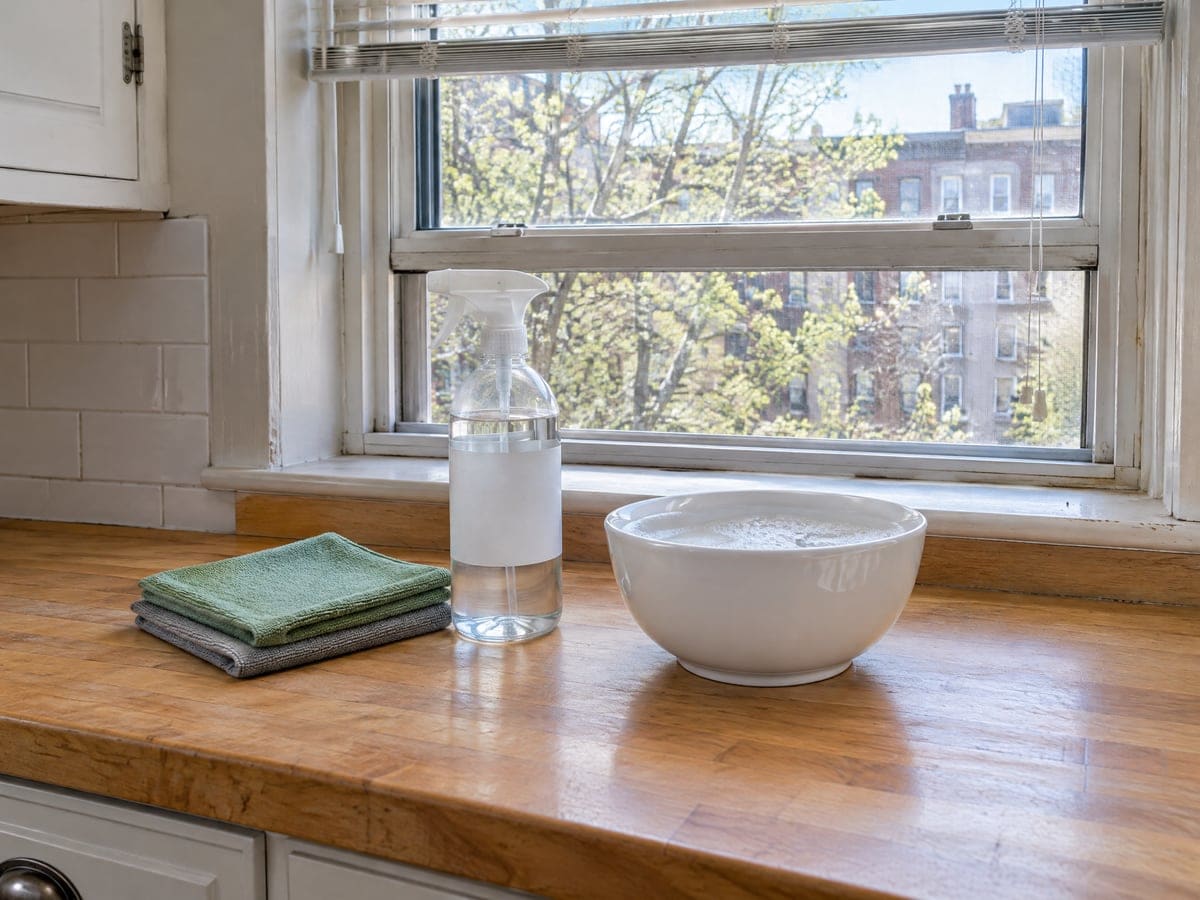
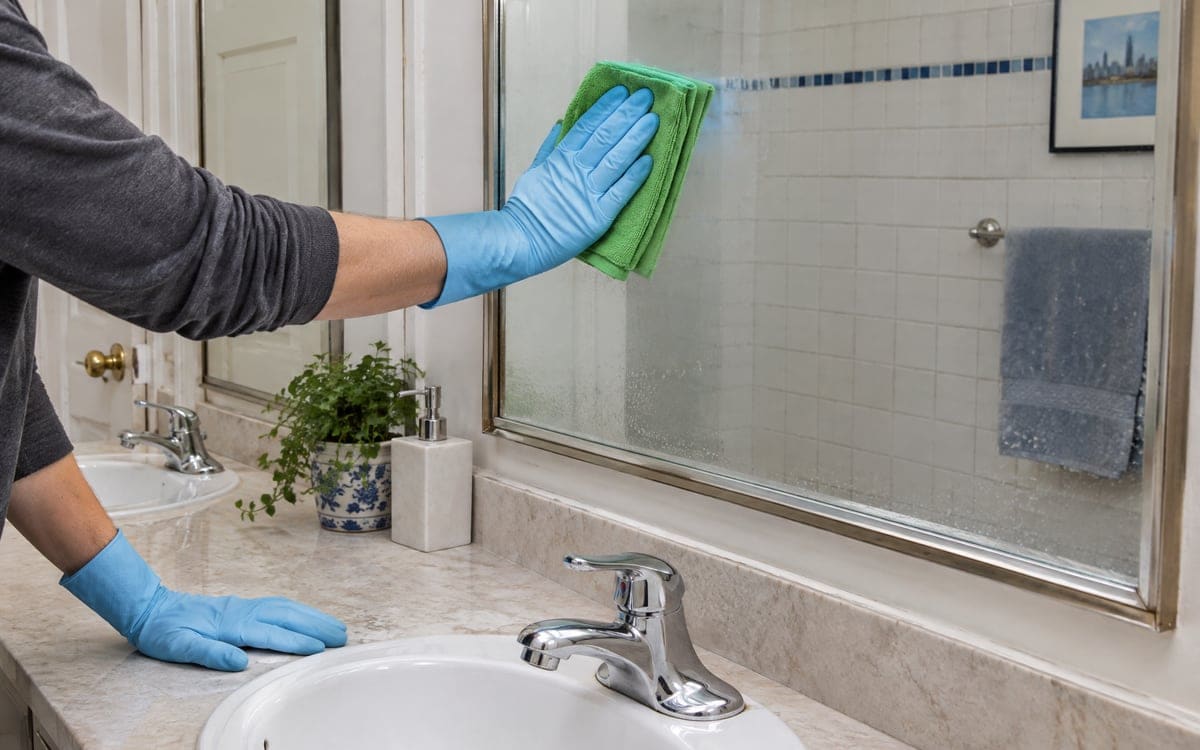
A folded microfiber cloth and clean water handle more than people expect. Dust lifts without a spray. Mirrors come clean with a damp side and a dry side. Finished wood takes a damp wipe with no product. We start with microfiber and water on every surface where it does the job, and we only reach for a product when the surface asks for one.
2. Milder products for everyday soil
For soil that water does not lift, we use the mildest product that works. A plain soap on counters and vanities. A diluted all-purpose on painted surfaces. A streak-free glass cleaner on windows and mirrors when the microfiber-and-water pass is not enough. The point is to match the product to the surface and the soil, not to use a stronger product by default.
3. Your own products
If you have products you prefer, we work from them. Hand them to us on the first visit or set them in the cabinet you want us to use. If a product does not say what it is for, we ask before we try it. If a product in the cabinet is one we would not use (an oven cleaner with no vents, a drain opener on a surface it was not built for), we leave it in the cabinet and tell you why.
4. Fragrance and sensitivities
Fragrance is a common sticking point. If someone in the house wants an unscented approach, you tell us on the call and we work from unscented products or your own. Pet households often fall into this category too; the call is where you set the rules on products around pets.
5. Air while we work
A cracked window and the bath fan on do a lot of the airing while we clean. In cold weather, we open a window only in the room we are in, for the length of the pass. By the time we leave, the room smells like the room again.
6. Where milder products fall short
Microfiber and mild products do not touch everything. Hard-water scale on a shower door after a season of hard water. Baked-on oven grease. Heavy soap scum in a tile grout line. For each one, we go over the trade-off before we try anything stronger. We can keep working at the surface with the milder approach, which takes more effort and more passes. Or we can use a stronger product once with your OK, which clears the surface with less effort but is one more thing to run through the room. The call is yours. Anything after a leak in the bathroom, or a stain that looks like growth on grout, is a different conversation; growth beyond small surface spots on tile and grout goes to a mold professional.
| Job | Milder approach | When it needs more |
|---|---|---|
| Dusting from the top of the room down | Microfiber, dry on finished surfaces, damp on painted | Rarely needs more |
| Mirrors and inside glass | Microfiber damp side, dry side | A streak-free glass cleaner on heavy film |
| Kitchen counters and sink | A plain soap and water | A degreaser on a stovetop with baked-on oil |
| Bathrooms, tub and tile | Water, bar scrubbing, a mild bath cleaner | A scale remover on hard-water buildup, with your OK |
| Toilets | A bowl brush and a mild bowl cleaner | A stronger bowl cleaner on a long-standing stain |
| Hardwood and vinyl floors | A barely-damp microfiber mop with water or a wood-safe soap | A stronger floor cleaner on an oil spill |
A green cleaning visit still catches the usual dust and soil; a few spots take more passes with the mild approach, and in most homes that trade is worth it.
When this fits, and when the standard approach fits better
Green cleaning suits a household that wants fewer products in the cabinet and milder ones on the surface. We do not claim a certification; we agree with you on which products come out and when. For a tough surface that needs less back and forth, the standard approach runs harder products where they help.
When green cleaning fits
- You want fewer products in the home overall
- A member of the household is sensitive to fragrance or to a specific product
- A pet lives in the home and spends time on the floors
- The home has new finishes that have not had everything thrown at them yet, including new finishes after a remodel
When the standard approach fits
- A single visit has to turn a long-neglected surface around
- An old stain in a bathroom or kitchen is beyond what a mild product can lift
- The home has one spot that needs a stronger product once, with your OK
A home can start green and keep a stronger product for one surface, or start standard and move to green on a schedule. A standard maid service visit, a regular schedule and a deep clean all run green with no change on your end.
What the visit covers for a green cleaning
A green cleaning visit uses microfiber and clean water on every surface where they do the job, milder products where they do not, your own products when you ask, and unscented products in a sensitive household. A cracked window or a bath fan runs while we work. The call covers hard-water scale, oven grease and heavy soap scum, so the trade-off is settled before we show up.
The rooms and the order of work are the same as a standard visit: top down, kitchen and bath in the middle, floors last. What changes is what comes out of the cabinet.
Safety rules do not change either. We do not mix cleaning products of any kind. Bleach is never mixed with ammonia, vinegar or any other acid, or with any other cleaner. We give no homemade recipes that combine products, and we do not pour cleaning chemicals down a drain. Fewer and milder products in the cabinet is the point, and homemade blends are not the way to get there.