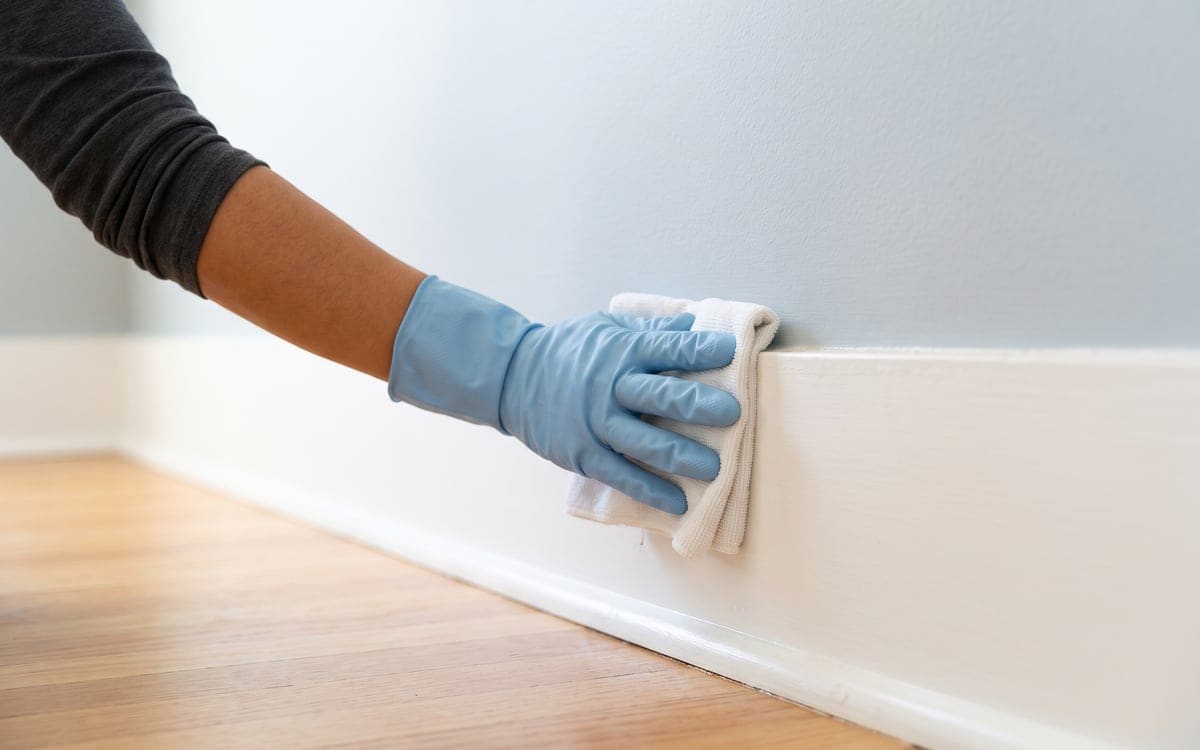
A baseboard is mostly dust and hair held in place by a sticky film
Walk through any apartment with a flashlight and the baseboards are the surface that collects what the floor misses. Dust falls, hair drifts and settles against the wall, and a bit of cooking film from the kitchen reaches every room over a few months. All three stick to each other and to the paint, which is why a dry rag just moves the pile around and a damp rag takes it off.
The buildup is heaviest in the rooms with the most foot traffic. Hallways carry the plainest dust layer. A kitchen baseboard also picks up a little grease because the cooking film reaches that low, and a bedroom with a pet turns up a hair line in the corner by the wall.
The top edge of a baseboard shows every mark
The flat top edge of a baseboard is a shelf, and it collects a layer that the vertical face does not. In most apartments, the top edge is also the only part of the baseboard that is at eye level when the room is cleaned standing up, so marks there are the ones that stand out. A pass that catches the face but misses the top edge looks finished and reads as unfinished.
The top edge gets its own wipe with the cloth folded over an index finger, so the cloth has pressure on the shelf without smudging the paint on the wall above it.
A soft duster or a dry sock takes the first pass
Before any water, the loose dust and hair come off. A soft duster, a dry sock pulled over a hand or the brush head of a vacuum work equally well. The pass goes along the baseboard, not down into it. The whole point of this step is to get the heavy stuff into the vacuum or the trash before the cloth gets wet; otherwise the second pass smears instead of cleans.
In a room with a pet, this step picks up a surprising amount. Hair settles in the corner between the baseboard and the floor, in the small gap behind the quarter-round, and against the leg of furniture that sits near the wall. All of it comes out before the damp pass.
A damp cloth with a drop of mild soap finishes most of them
Warm water in a quart container, a single drop of mild dish soap, a flat microfiber cloth wrung almost dry. The cloth goes along the top edge first, then down the face, then into the corner where the baseboard meets the floor. The pass is light. If the water in the bucket is gray after two walls, it gets changed.
A plastic bucket under the baseboard catches the drips the cloth leaves, which is handy on a hardwood floor. On a tile floor, a towel against the baseboard does the same job. The dripless pass keeps the finish clean.
Painted baseboards take the lightest touch so the finish stays
Most apartment baseboards are painted. The paint on a baseboard is almost always eggshell or satin, both of which take a wipe without a problem, and sometimes semi-gloss on an older trim, which is friendlier still. A melamine sponge used wet with light pressure takes stubborn marks off painted trim without lifting the paint, but the same sponge used hard will dull the paint, so keep the pressure light and go over a stubborn mark more than once.
A spot where the paint is chipped, cracked or lifting is a repair item for the landlord or a painter. The cleaning does not sand, scrape or touch loose paint. The spot gets a note on the way out and the pass moves to the next wall.
Older wood baseboards get wiped along the grain
In a vintage building, the baseboard is often a tall, deep piece of painted wood or, less commonly, a stained wood with varnish. On a painted older baseboard, the same damp cloth rule applies. On a varnished one, the cloth stays very light on water: too much water on an old finish lifts the sheen. The pass goes along the grain, in long strokes, with a dry pass right behind.
Deep baseboards in older housing hold more dust in their profile than the thin trim in a modern condo, so the dry pass carries more of the work. Older Chicago apartments covers the older-stock surfaces together, and the baseboards there are part of the same story.
Corners and the gap behind the floor get the detail attention
The two spots that make a baseboard look clean or dirty are the inside corners of the room and the thin line where the baseboard meets the floor. Both collect what the main pass does not reach: hair tangled with grit, a little cooking film, sometimes a spider web. A corner duster or a soft cotton swab works the inside corners. A thin microfiber folded over the end of a plastic putty knife works the gap along the floor without damaging anything.
The gap under the quarter-round, on floors that have one, is where the vacuum attachment matters most. The attachment goes along the gap once dry, then the damp cloth passes along the face. The gap stays dry; cleaning water never goes under a quarter-round.
Baseboards sit in a deep clean, not a maid service visit
On a deep clean the baseboards are wiped the length of each wall, going around furniture that moves easily. On a maid service visit the floor pass vacuums along the baseboards, and the full wipe belongs to a deep clean.
For a tenant moving out, a move-out cleaning wipes the baseboards along each wall. On a new move-in, a move-in cleaning vacuums reach the baseboards and the corners while nothing is in the way.
How we work through baseboards
| Baseboard situation | What usually sits there | How we work it |
|---|---|---|
| Hallway baseboard | Dust and hair from traffic | Dry pass, then damp cloth, top edge last |
| Kitchen baseboard | Cooking film plus grit | Damp cloth with a drop of mild dish soap, firmer pass |
| Bedroom baseboard with a pet | Hair in the corner and along the quarter-round | Vacuum attachment along the gap, then damp cloth |
| Bathroom baseboard | Water splash, hair, lint | Damp cloth; watch for soft caulk at the floor line |
| Deep painted trim in a vintage apartment | Heavy dust in the profile, finger oils on the top | Dry pass, damp cloth along the grain, top edge separately |
| Varnished wood baseboard | Dust and finger oils | Very lightly damp cloth, dried right after |
| Quarter-round gap on hardwood | Hair and grit against the floor | Vacuum attachment dry, no water in the gap |
Baseboard cleaning in older Chicago buildings
In older buildings in general, baseboards tend to be deep painted wood, and the dust lives in the profile grooves rather than on a flat face. The profile holds more dust than the thin trim in a modern condo, so the dry pass carries more of the work. For an apartment where the baseboards have been waiting, an apartment cleaning visit points to a deep clean as the right first visit.
Winter in Chicago makes the pass more visible. Salt and grit tracked in on boots end up along the base of the wall by the door first and in the hallway next. The salt dulls hardwood near the floor and leaves a gritty line against the baseboard. Winter grit tracked across the floor covers the floor side; the baseboard side gets a damp cloth pass once the floor is dry.
How often baseboards need a full pass
A full baseboard pass is not weekly work. In most apartments, a quarterly full pass is enough to keep the baseboards even, with light dust passes in between. For a home with pets, more frequent passes in the pet's room keep the hair line under control. How often to schedule a visit walks through the overall rhythm, and the baseboard pass fits inside the schedule rather than driving it.
The weekly dust pass fits in a weekly maid service visit. The quarterly full pass belongs to a deep clean, which wipes the baseboards the length of each wall.