Where the buildup hides
A deep clean reaches the places a weekly visit does not. The order below is how our cleaners work through a home, and most of it is a floor-up job with no climbing.
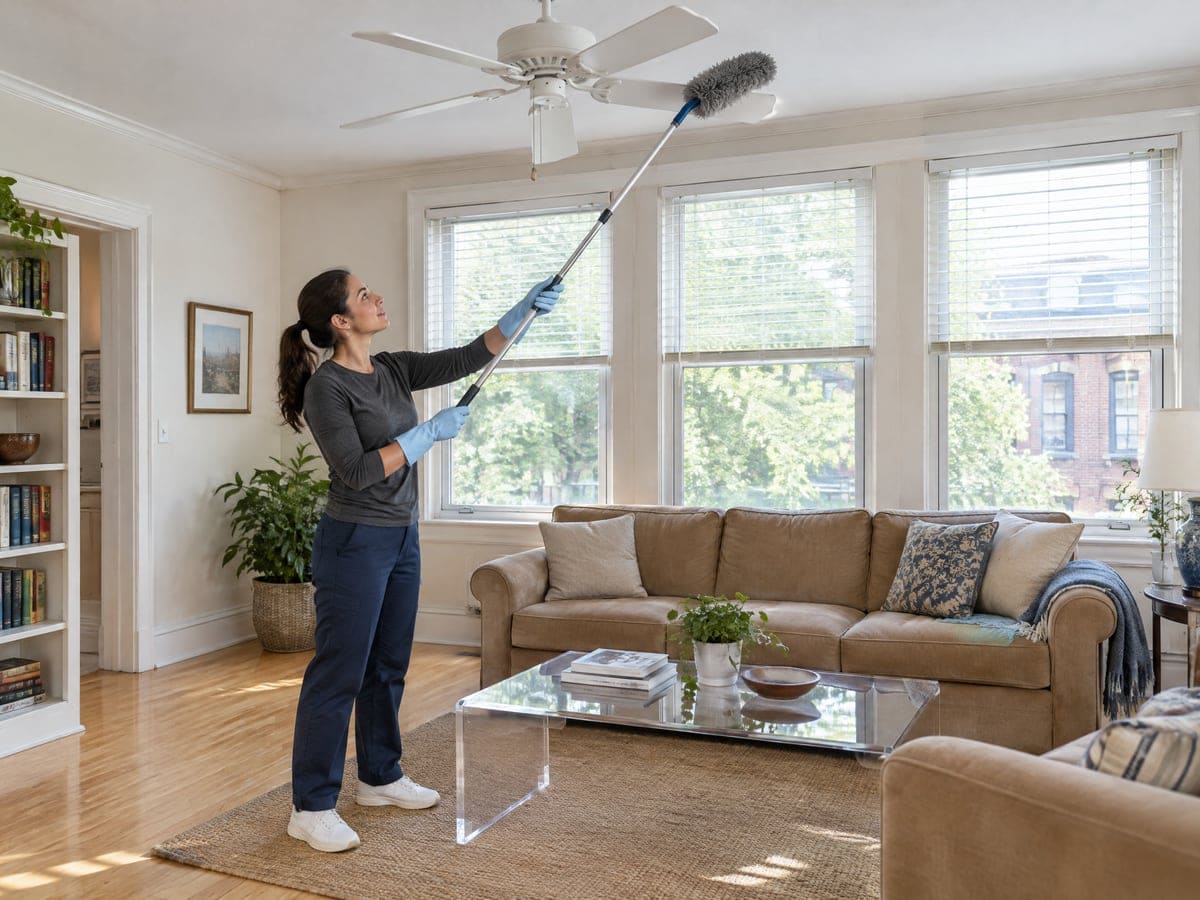
1. Ceiling fans, vents, light fixtures and the tops of cabinets
We clean these from the floor with an extendable duster. Ladders, step stools, chairs, tub edges and counters are never used to reach a high spot. Blades on a ceiling fan are wiped from the floor. Anything that cannot be reached that way is left where it is, and we tell you so.
2. The kitchen
Cabinet fronts, including the knobs and pulls where fingers land. The backsplash, especially behind the stovetop where cooking spray collects. Range hood filters, pulled out and washed. The outside and inside of the microwave. Inside the oven, when you ask, with the racks and any loose parts taken out first. Inside the fridge and freezer, when you ask, with the shelves out, the gaskets wiped and the drawers washed.
3. Bathrooms
Grout lines around the tub, shower and floor, worked with a brush rather than only a rag. Shower glass where hard water has left a film. Behind and around the toilet, including the base and the bolts. The fan cover, cleaned from the floor with the duster. The caulk edges around a tub or shower, cleaned where they are solid; peeling or cracked caulk is a repair job.
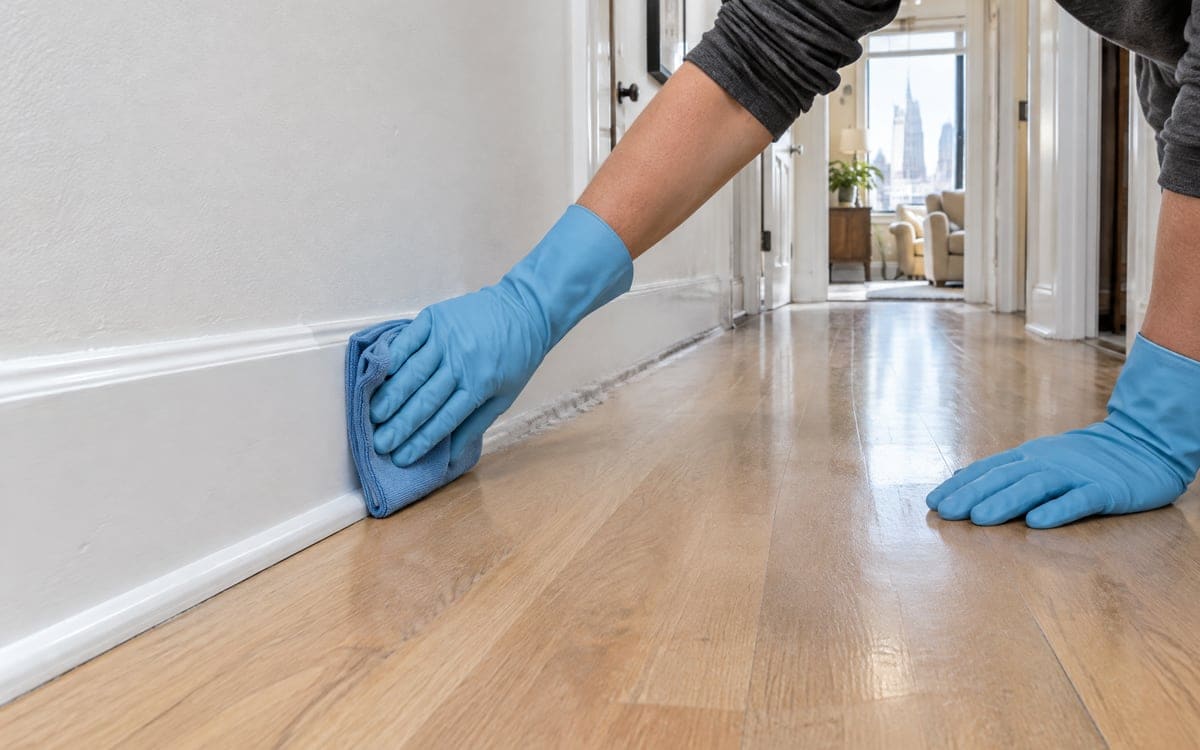
4. Baseboards, door frames, switch plates and handles
The parts the hand and the vacuum both miss. Baseboards wiped the length of each wall, going around furniture that moves easily. Door frames top to bottom. Every switch plate and the handles on both sides of each door, where the hand goes a dozen times a day.
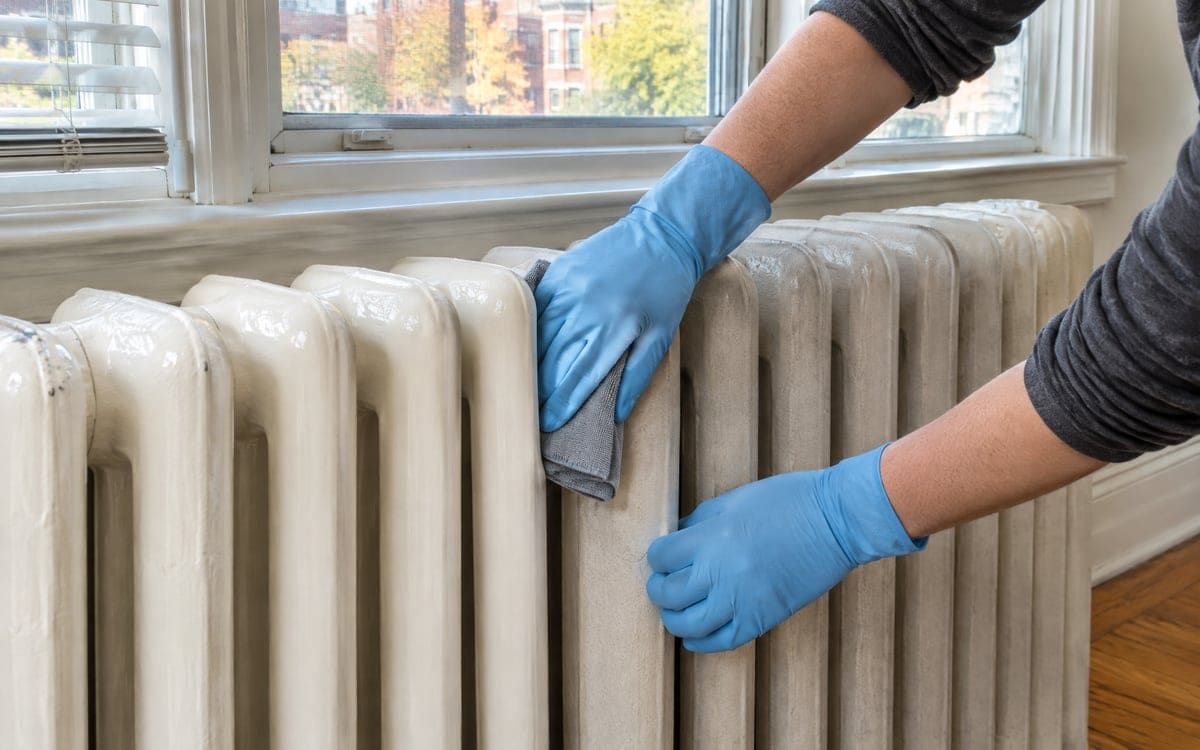
5. Radiators, old window sills and painted trim
In a Chicago apartment with cast-iron radiators, the gaps between the columns hold a season's worth of dust. We wipe each column one by one. Old wood sills, painted trim and the rails of six-panel doors all get the same wipe-down. We do not scrape, sand or dry-sweep paint. If paint is already flaking, that is for the landlord or a painter.
6. Under and behind furniture that moves easily
A nightstand or a kitchen chair moves and the floor underneath it gets cleaned. A heavy couch or a china cabinet stays where it is. We do not move appliances. If something is standing in the way of a spot you really want cleaned, say so on the call and we can plan around it.
7. Floors, last
Vacuumed first, including along baseboards and into corners, then washed on hard floor. Grout on tile floors cleaned where a mop will not pull up the film. Rugs vacuumed on both sides when they are small enough to turn.
| Spot | What builds up | What a deep clean does |
|---|---|---|
| Top of door frames | A season of dust and lint | Wiped from the floor with an extendable duster |
| Baseboards | Dust, hair and shoe scuffs | Wiped the full length of each wall |
| Cabinet fronts | Cooking film and finger marks | Wiped front and knob by hand |
| Range hood filters | Grease and dust | Pulled out and washed |
| Grout around a tub | Soap film and mildew | Brushed and rinsed clean |
| Shower glass | Hard-water film | Film cleaned off where it comes off |
| Behind the toilet | Dust and splash | Reached and wiped on each visit |
| Radiator columns | Dust between the gaps | Wiped column by column, floor level |
If more than a few rows on the table sound like your place, this is the first visit to book.
When a deep clean fits, and when another service does
When a deep clean fits
The usual reasons are a long gap since the last top-to-bottom clean, guests on the way, a season change that puts the windows and radiators back in play, or a recurring schedule you want to start from a clean baseline. Months of a shedding pet or a stretch of heavy cooking show up on this list too.
When another service fits
If the rooms are already empty, move-out cleaning is the right page: we can get into cabinets and ovens because nothing is in the way. For a season reset after winter, with the windows and radiators as the focus, see spring cleaning. If a renovation has just finished, construction dust is its own job and belongs to post-construction cleaning first. If the place is already kept up and you want it kept there, a plain maid service visit is enough.
A deep clean is often the right start before a regular schedule afterward. The weekly visits that follow keep the home at a level the deep clean just reset.
What a regular pass keeps even and what a deep pass catches up on are two different lists.
A regular visit and a deep visit, side by side
What each visit reaches, with the deep visit adding the layer that a weekly or every-other-week pass skips.
A regular visit
- Counters, sink and stovetop in the kitchen.
- The outside of each appliance.
- Tub or shower, toilet, vanity and mirror.
- Dust on surfaces you use, from the floor.
- Floors vacuumed and mopped last.
A deep visit
- Baseboards, door frames and switch plates.
- Cabinet fronts and the kitchen backsplash.
- Grout in the shower and around the toilet.
- The tops of cabinets, worked from the floor.
- Radiators, old window sills and painted trim, column by column.
- Inside the oven and the fridge.
What the visit covers
A deep clean is a thorough visit to an occupied home, with you still living in it. Furniture and belongings stay where they are, apart from the light pieces our cleaners can move easily. We go over products on the call, including anything to leave off certain surfaces, such as the floor on an old wood kitchen or a stone counter.
Inside the oven and inside the fridge are included when you ask; both need to be emptied before we come so the shelves and drawers can come out and the gaskets get wiped. Range hood filters come out and go in the sink. We clean surfaces; we do not make health claims about them.
Mold shows up in a deep clean more than in a weekly visit. We clean small surface spots on hard, non-porous surfaces such as tile and grout. Anything spreading, growing on drywall or wood, or showing up with a musty smell goes to a mold professional. We do not treat or test for mold.
Some dark patches come off with a cloth; the ones that keep coming back need a mold professional.
From your call to the finished rooms
- You call us and describe the home: rooms, bathrooms, how old the building is, the oven and fridge, whether cabinet fronts and baseboards are on the list.
- We go over products, pets and anything to leave alone.
- You get a price for the visit and decide.
- The cleaning happens, and we walk the rooms with you at the end if you are home.
Older Chicago homes and the deep clean
Older buildings add steps to a deep clean. The median year built for Chicago housing is 1953, and about 39 percent of Chicago's housing was built in 1939 or earlier. About 58 percent of Chicago housing was built before 1960. Older housing often comes with cast-iron radiators, plaster walls, original tile and painted wood trim. Each one changes how the deep clean runs. A radiator wipes down column by column rather than one pass across the front. Original grout holds film that comes up with a brush where a rag only smears it. Painted trim shows a smear of a hand along a hallway, which means a wipe per length instead of a quick swipe. See vintage apartments and their radiators for the longer piece on what the older housing adds, and what sets the price of a deep clean for how building age shows up on the quote.