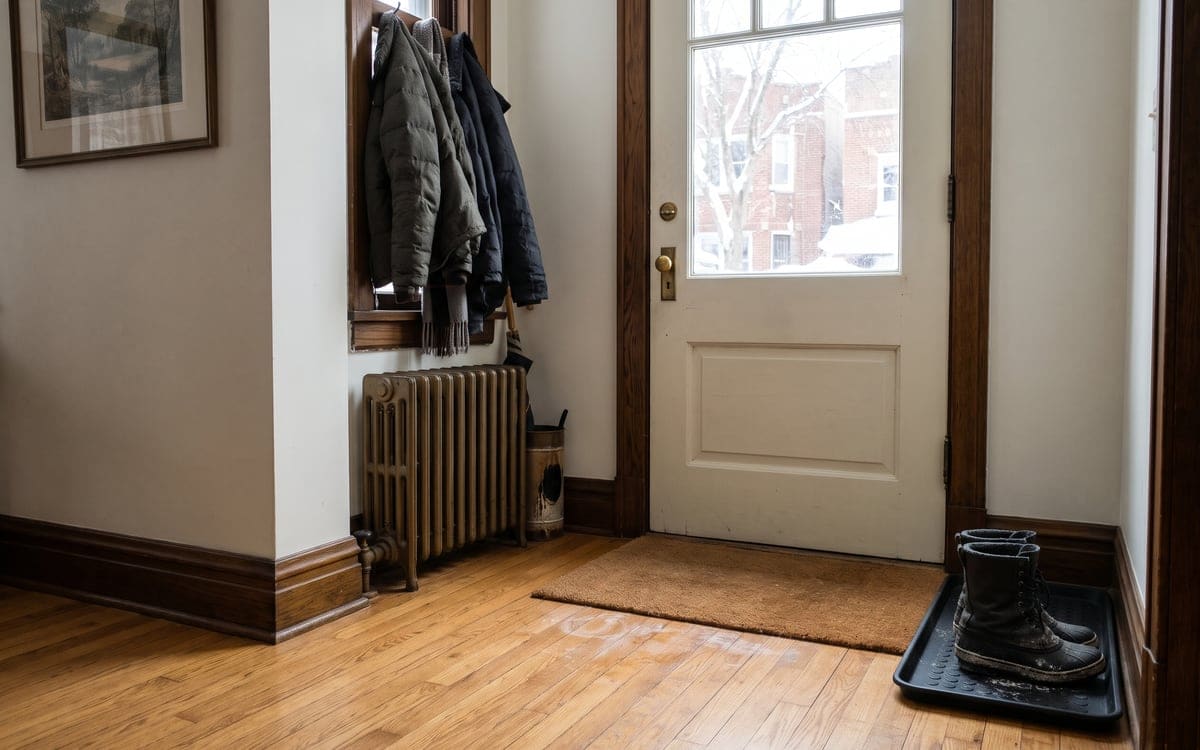
The snow season
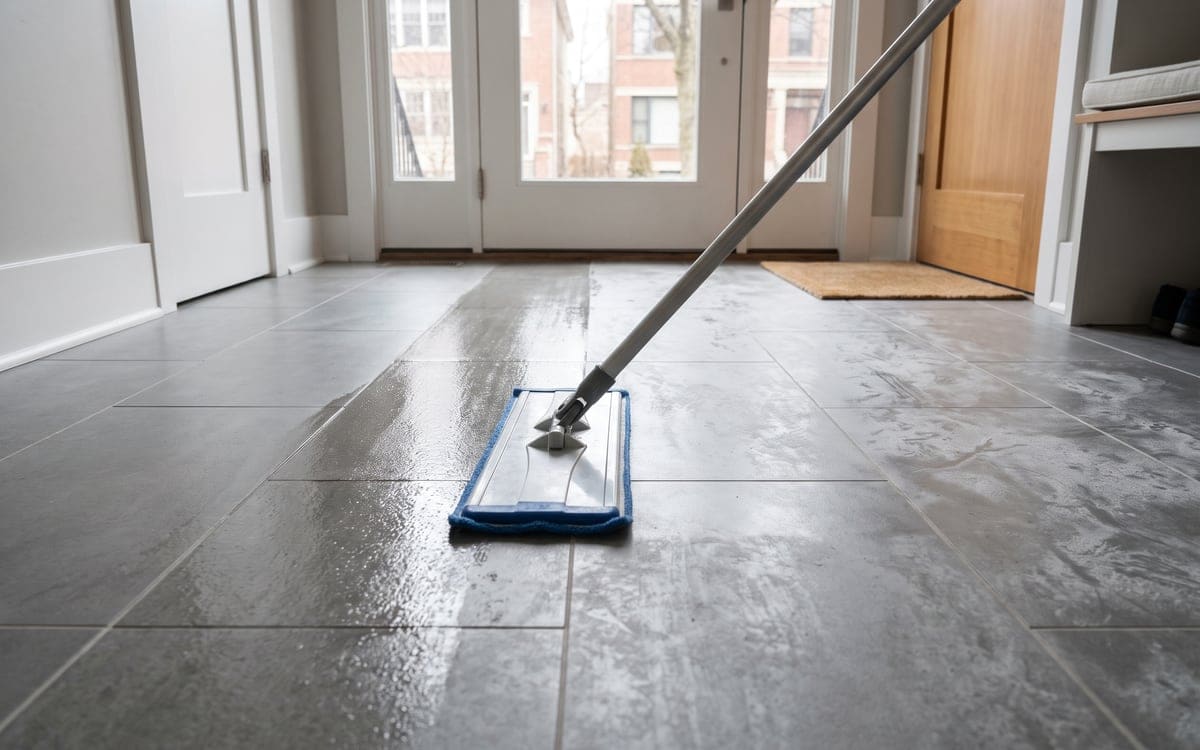
Winter in Chicago is not two bad weeks and done. Measurable snow at O'Hare arrives around November 18 and lasts until about April 2,1 and a typical year sees 38.4 inches of snow, with January and February the snowiest months at 11.3 and 10.7 inches.2 The city averages 121 nights with a low at or below 32 degrees,2 a lot of mornings for ice to form on the sidewalk and salt to go down and come back inside.
On top of that, lake-effect snow on north or northeast winds boosts snowfall in the Chicago area.3 The stains on the floor by the door track the length of the season.
How salt gets inside and stays
Salted slush rides in on every boot, melts and drains onto the floor, and leaves the salt behind when the water evaporates. By morning, a white outline of a boot print sits on the tile or the wood, and anywhere the water pooled is a chalky shadow that a dry broom will not touch. Each melt leaves a trace, the next boot leaves another on top of it, and because salt is water-soluble, dry sweeping only moves the grit while the film underneath still needs water.
Wood floors
Hardwood takes the worst of winter at the door. On a polyurethane finish in good shape, the film sits on top and lifts cleanly with a well-wrung microfiber and warm water. On an older or waxed finish, salt residue can dull or etch the sheen, and anywhere the salted water reaches raw wood through a scratch or a seam, the stain can go into the wood. Engineered flooring falls between the two: the top layer is usually a modern finish, but the seams between planks are tighter and less forgiving if water sits.
A set-in film takes a mild soap and a gentler cadence of damp wipe, dry wipe, repeat. If the finish has gone cloudy in a halo under the salt, that is the finish itself, and refinishing is the next trade. For older plank floors with soft finishes, old wood floors has more on what the finish allows.
Tile and grout
A glazed tile is water-tight; the film sits on top and comes off with a damp microfiber. The grout line is where the trouble lives. Grout is porous and drinks the salted water, so after a few weeks of winter, the grout in the entry looks grayer than the grout in the next room. Darker spots turn up first along the edges where boots pivot off a mat, and then creep into the main run of grout as the season goes on.
The grout takes a soft brush worked along the line, warm water and patience. Stronger products on grout are a conversation for a planned deep clean, not a weekly visit. A sealer on the grout, applied after a deep pass before the next winter, slows the drinking down for the following year.
Mats, runners and boot trays
The job is to catch the salt before it reaches the floor. A deep absorbent mat outside the door takes the grit, a long washable runner inside catches what the first mat missed, and a boot tray near the door holds what wet boots are still carrying when the coat comes off. Any rug with a rubber backing keeps melt off the finish but holds the salt in the pile, so a heavy shake outside plus a vacuum pass are the regular routine, and washable runners get a wash on top of that.
| Floor | What salt does | How a cleaning lifts it |
|---|---|---|
| Hardwood with a modern finish | Film on the finish, mild dullness under heavy buildup | Dry sweep, then a well-wrung microfiber with warm water |
| Hardwood with an older or waxed finish | Etching into the sheen, risk of moisture at a seam | Light damp passes with a mild soap, dried right after; refinisher for etched spots |
| Glazed tile | White haze on the surface | Damp microfiber mop; the glaze does the rest |
| Grout lines | Grayer in the entry than the next room | Soft brush, warm water, patience; a stronger product only on a planned deep clean |
| Vinyl plank and laminate | Film on the surface, water risk at the seam | Barely-damp mop with a cleaner the floor allows |
| Rugs and runners | Grit worked into the pile, salt crystals at the base | Shake outside, vacuum, machine wash when washable |
| Natural stone (slate, travertine) | White film on the stone, salt pulled into pores | Water and a stone-safe soap; stronger products can etch |
| Concrete | White blush that keeps coming back | Scrub with warm water; a stiff brush on heavier buildup |
A mat, a vacuum and a damp pass twice a week keep the stain from setting in.
Mopping
A dry broom moves the grit but leaves the film, and a dry microfiber drags the salt across the floor in a thin smear. A barely-damp microfiber is the move: the water dissolves the salt, the microfiber picks it up, and the floor dries without a streak. The mop head goes in a bucket of clean water, not back in the salt bucket, so the second pass puts clean water on clean floor.
Twice a week in the worst months, and once a week in a mild stretch, keeps the entry under control. A cleaner on a weekly visit through winter takes the entry each visit, and a mid-week damp pass by whoever is home finishes the job.
The entry is the first thing a cleaning fixes in winter
A winter cleaning starts at the door and works in. The runner comes out. The tile or the wood gets vacuumed and then damp-mopped. The baseboards on either side of the door get wiped, because the salt kicks up when boots come off. The leg of the console table gets a wipe where the dog brushed past. Maid service carries the entry as the first stop of the visit in winter.
If the home has been running on light wipe-downs for a few months, a deep clean catches the grout, the baseboards and the back corners of the entry that the weekly pass does not reach.
Spring is when the last of it comes up
Some of the salt waits for the season to end. A film that keeps coming back every week is set in deep enough that it needs a full pass with warmer water, more time and a careful look at the grout. A spring clean once the snow is actually done gives the entry a full reset: the floor goes end to end, the baseboards get wiped by hand, the grout gets its brush, and the runner comes out for a last wash before it goes into storage.
By early April, the pattern starts to break. The normal last measurable snow at O'Hare is April 2,1 and some years run a storm later than that. Once the snow is done for the year, new salt stops coming in, and anything still on the floor is the last of what the season left.
A winter cleaning schedule that keeps the film down
A pattern through the winter works better than one long spring pass. How often to schedule in winter walks through weekly and every-other-week in detail; the short version is that in a Chicago winter, the entry carries most of the load, and a cleaning that visits the entry every week keeps the film from setting in on the hardwood or in the grout.
For homes with hardwood near the door, the trade-off is worth running by a professional before salt season starts. A finish in good shape handles the twice-a-week damp pass. A finish that has gone soft calls for a gentler rhythm, and the right frequency gets set on the call for that floor.