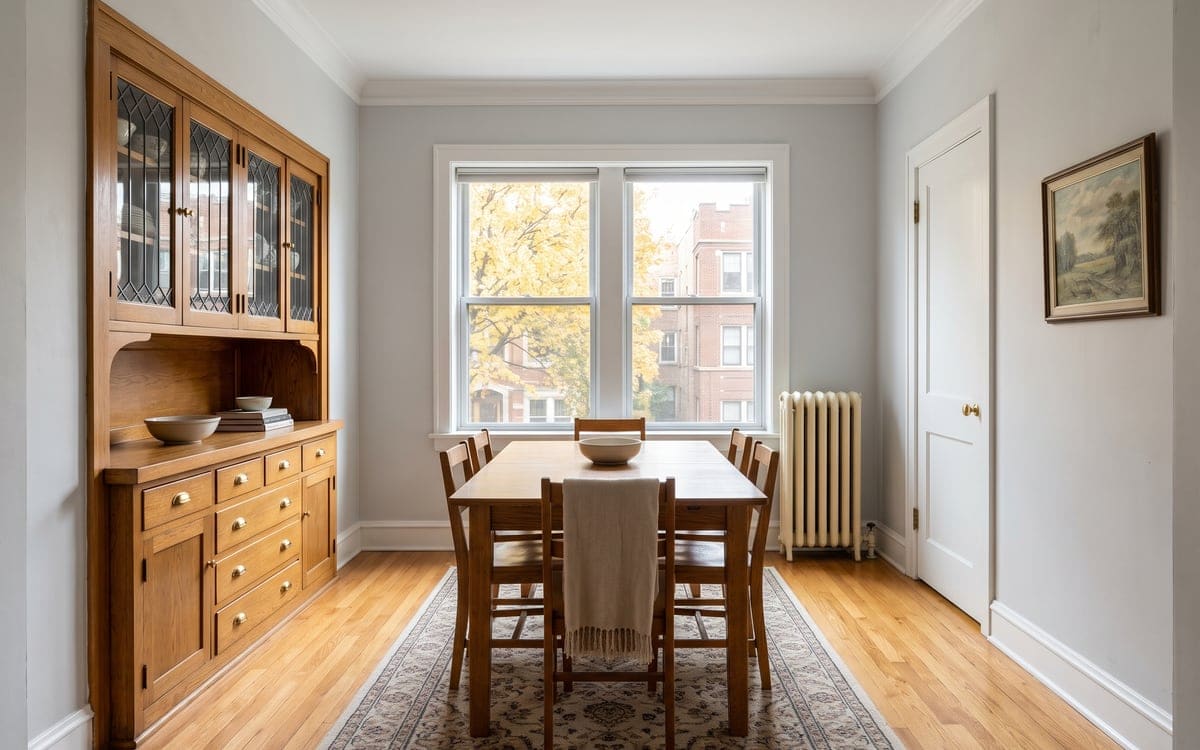
Older housing runs through Chicago
The median year a Chicago housing unit was built is 1953.1 About 39 percent of all housing units, 495,715 of them, were built in 1939 or earlier,2 and about 58 percent of all units were built before 1960.2 A lot of the older stock sits in small buildings rather than towers: about 57 percent of Chicago's housing units are in buildings of one to four units, and about 27 percent in two-, three- and four-unit buildings.3
Radiators
Painted cast-iron radiators collect dust between their columns, and the dust bakes on when the heating season starts. The pass is cold, with the heat off and the radiator cool. Steam valves and air valves stay where they are, and a loose or leaking valve goes to whoever maintains the home.
Plaster walls
Old plaster is soft at the surface, and water in small amounts is what it takes. Water goes in a bucket rather than a spray bottle, so the wall never gets wet enough to run. Baseboards on an old wall tend to be deep and painted, and chipped or peeling paint is for a painter.
Hex and subway tile
Tile faces are easy; grout lines are the real job. The grout line is the slow pass, and steel wool, wire brushes and mixed cleaners stay off old grout. Hard-water film on glass gets its own cleaner, used on its own and never with chlorine products.
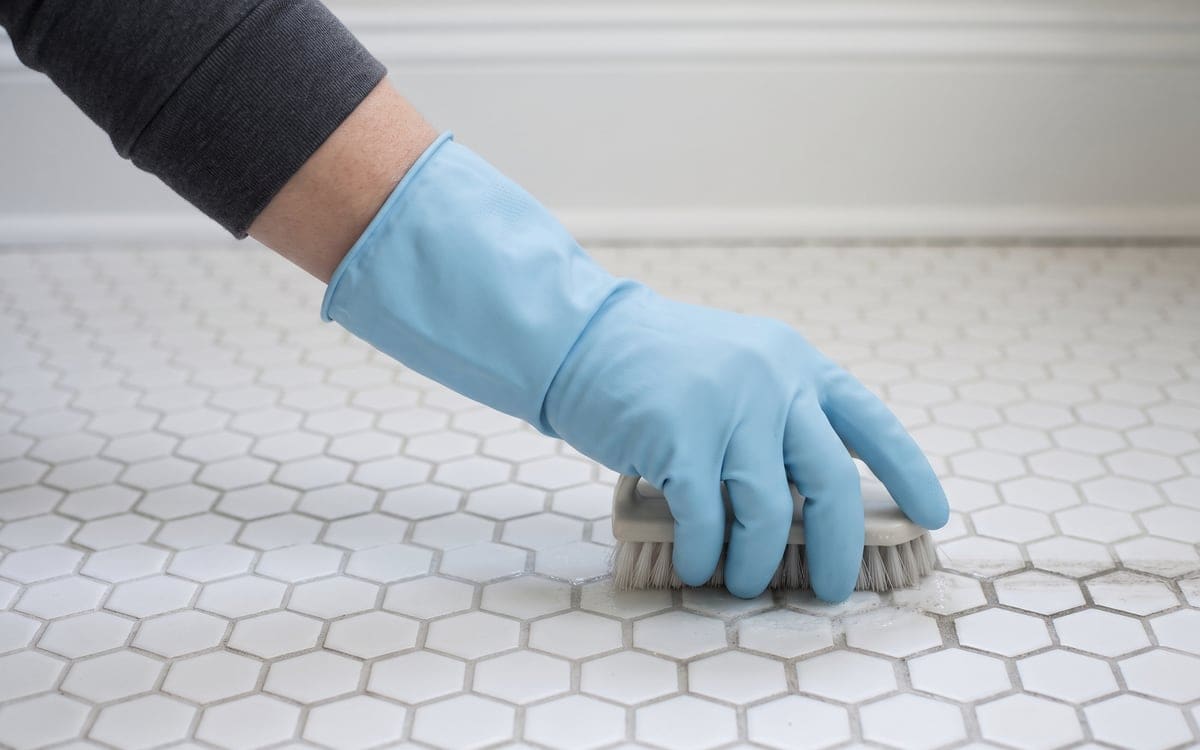
Caulk around a tub or shower is a different surface again. Solid caulk gets wiped clean. Cracked or peeling caulk goes on a note as a repair item.
Wood floors
Old oak or maple strip floors are forgiving when the water stays low. The gaps between strips are where water does the damage over time, so the pass stays well under a soak. If the floor is already dull, a sanding and refinishing job is the fix, not a cleaning.
Painted trim
Older trim takes a damp cloth. Peeling or flaking paint is handled by a painter or a qualified specialist.
Old windows, sills and tracks
Single-hung and double-hung wood windows have deep sills, painted sashes and runners that collect everything the city brings in. Inside glass is for a house cleaning; outside glass above the ground floor is for a window service with the right rigging.
Back stairs and narrow halls
In a two-flat or four-flat with a back stair for cooking traffic, pets and alley access, the kitchen floor gets cleaned to the back stair door and no further; the stair itself belongs to the building. In a narrow hall, the visit starts at the far end and works out, so the hall is cleaned last and nobody walks over wet floor to leave.
How we match the visit to the apartment
| Feature | What builds up | How it gets cleaned |
|---|---|---|
| Cast-iron radiator | Dust between the columns | Long brush, then damp cloth, cold only |
| Plaster wall | Smudges and surface marks | Damp cloth, top down, never a scrubber |
| Hex or subway tile | Grout film in the lines | Soft brush and mild cleaner, line by line |
| Oak or maple strip floor | Grit at the edges, haze on the finish | Vacuum first, then a damp mop, no soaking |
| Painted trim | Dust on top, fingerprints on the sides | Damp cloth; peeling paint goes to a painter and any testing to a specialist |
| Old window sill and track | Grit, winter film, pet hair | Vacuum, then a damp wipe, inside glass only |
| Back stair kitchen door | Cooking haze on the paint | Damp cloth to the door; the stair stays with the building |
When this visit is a deep clean, and when it is routine
A first visit in a vintage apartment is usually a deep clean because the catch-up list is long. After that, the same apartment can sit comfortably on a spring clean after the heating season each year, with a recurring visit on a steady rhythm in between. Deep or regular walks through the difference in more detail.
If the apartment is just coming out of a rehab, cleaning up after a rehab is a different visit. Fine dust keeps settling after the trades leave, so a cleanup can need more than one pass. A vintage apartment that just had its trim repainted or its tile regrouted needs more passes than a modern unit, because the dust has more surfaces to land on.
For an older unit at the end of a lease, moving out of an older unit picks up what the regular rhythm never touched, cabinet by cabinet and appliance by appliance, once the rooms are empty. For salt film at the door after a Chicago winter, winter floors covers what works on wood and tile.
Repair items a cleaner leaves alone
Peeling or cracked paint, cracked plaster, loose radiator valves, dripping fixtures, loose tile, cracked grout, warped floor boards, and anything about the back stair itself are repair items that go to whoever maintains the home. You take them up with the landlord in a rental, or the association and the right trade in a condo. Testing or treating anything inside old paint or old plaster layers is a specialist's job.
The kitchen in a vintage apartment is its own project
Older kitchens often have painted wood cabinets, open shelving, and appliances that have been swapped in over the years. Cabinet fronts around the knobs and pulls hold the most everyday wear, and the kick plates below gather the kitchen's grit. Both get a damp cloth and a mild cleaner. Nothing abrasive goes on painted cabinet faces. Behind the stove, grease and dust bond together into a layer that comes off with a degreaser used on its own, never mixed. Inside the oven and inside the fridge are set up as extras on the call so the household decides whether this visit is where they come off the list.
Bathrooms built before 1950
Older bathrooms carry porous grout, soft caulk at the tub, enameled cast-iron, and vintage vanity sinks with their own curves. Enamel scratches under a stiff brush. The caulk line at the tub gets wiped only; cracked caulk is a repair item.
Products and household preferences
A household's preferences and allergies are sorted on the call before the first visit, and bleach is never mixed with ammonia, vinegar or any other product.