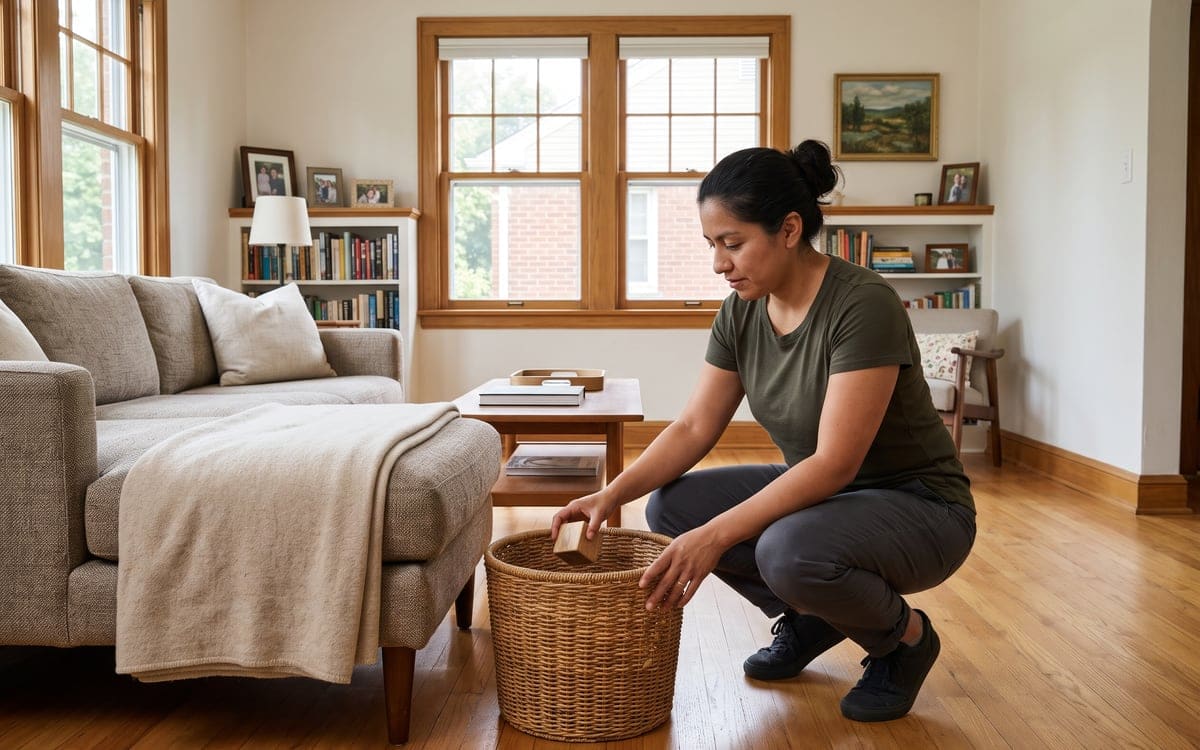
Clear surfaces matter more than a tidy floor
The thing that usually holds a visit back is a surface the cleaner cannot reach because something is on it. Toys and shoes on the floor move easily; a kitchen counter buried under mail does not.
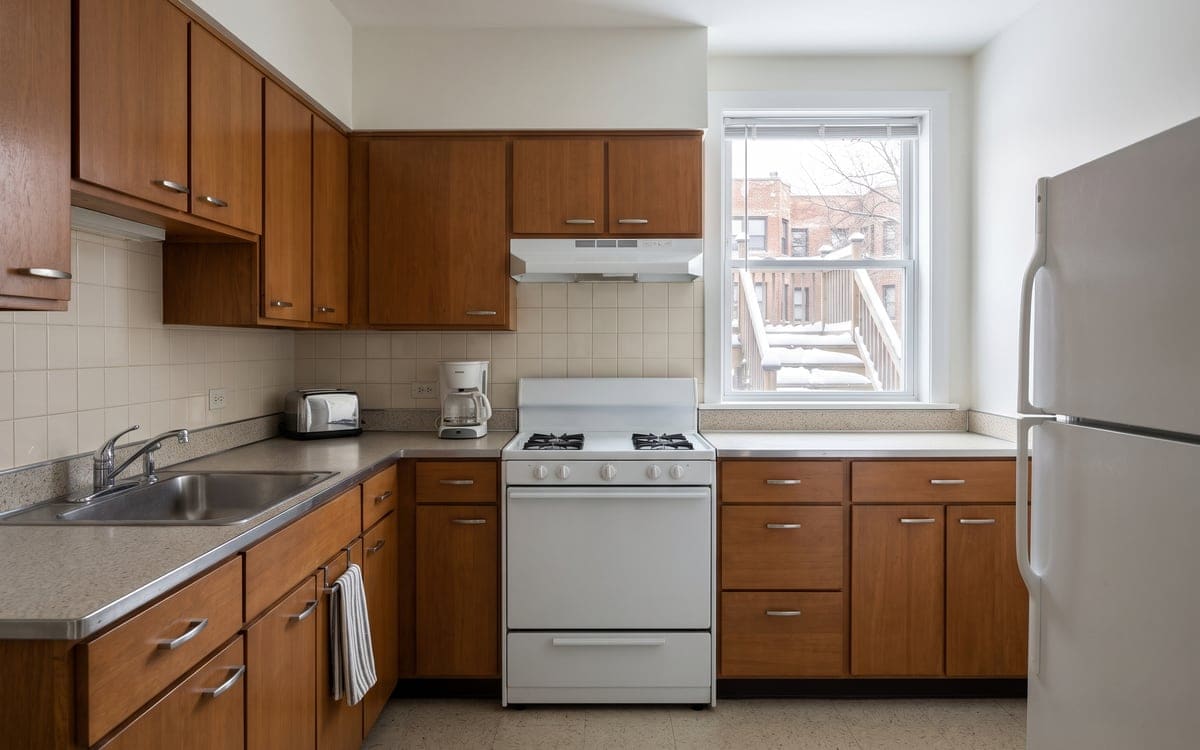
Before the visit, clear the horizontal surfaces that carry the most work: kitchen counters, the bathroom vanity, the dining table, and the top of the dresser in each bedroom. Push small appliances back far enough that the cleaner can wipe behind the toaster. Toys, laundry baskets and shoes on the floor are less of a problem; they move easily, and the cleaner can get around them. Working through what a cleaning includes ahead of time can help you decide which surfaces matter most to you.
Pets do better in one room
Dogs and cats, even friendly ones, add complication to a cleaning visit: a loud vacuum, people they do not know, and a front door that opens and closes more than usual. A nervous animal that bolts can land in a part of the home nobody wants, or out on the street.
The simplest fix is one closed room, with water, a bed, a litter box if that applies, and the door shut. Note which room on the call so the plan for the visit does not run through it until the animal can be moved to a part of the home that is already finished. Big dogs that need the yard, parrots that react to vacuums, or lizards in a tank that cannot be touched are all worth saying in advance so the visit can accommodate them.
Preparing for a house cleaning in a Chicago building starts up front
How we get in is a question to answer before anyone is standing on your sidewalk. About 57 percent of Chicago's housing units sit in buildings of one to four units,1 and about 20 percent sit in buildings of 50 or more.1 A walk-up and a tower are different openings to work out in advance.
A few details to mention on the call:
- Whether you plan to be home.
- Whether a key is left with a doorman or a neighbor.
- A lockbox or smart-lock code if that is the way in.
- Whether a super or building manager needs to know ahead of time.
The apartment cleaning page has more detail on how buildings tend to run.
A building may have its own rules for service visits
A bigger Chicago building can set its own requirements for cleaners, movers and other service visits: a service elevator rather than the passenger elevator, a window for drop-offs and pickups, or paperwork filed with the management office in advance.
Reach your front desk or management office in the week before your visit and ask what the building expects. Building requirements can change how a visit is arranged. The question is lower stakes if it is asked early.
Valuables and papers go away
The surfaces being cleaned are the surfaces you leave things on, so jewelry, wallets, cash, prescription bottles and important mail belong somewhere out of the way the day before the visit. A bedroom dresser top is a classic trouble spot, as is the little bowl by the door with keys and change.
For papers that must stay out, a labeled tray or folder is a reasonable signal.
Say what to leave exactly as it is
If there is a stack of papers, a child's lego project, a sewing table mid-project, a pet-sitting checklist on the fridge or an arrangement of books you do not want touched, say so on the call. The cleaner leaves those spots alone.
The same applies to specific items that need a particular approach: a sentimental piece of pottery on an open shelf, a cast-iron pan that should not meet water, a mirror with a damaged corner, a floorboard that squeaks and should not be wiped under heavily, or a houseplant that reacts badly to being moved. A regular maid service runs more smoothly when the odd items in each room are already flagged, because the cleaner can hold back on them from the start and ask you later about anything new.
A note the first time a cleaner comes helps more than one later. The first visit is when the cleaner builds a mental map of the home, and the room where the pottery lives is easier to flag before the shelf has been dusted around than it is to recover from after a mistake. If a few items have changed since your last visit, mention them on the call so the cleaner is not working from last week's layout. Household shifts around pets, kids, and medical equipment are the kinds of changes that are easy to overlook on short notice.
Tell us about products and preferences
A fragrance preference, an ingredient to avoid or a cat that reacts to a common cleaner all go on the call so the plan accounts for them.
Never leave two cleaners mixed together in a bottle, and never ask any cleaner to mix one. Bleach does not combine with ammonia, with vinegar or with other acids, or with another cleaner, under any circumstance.
You do not need to clean before the cleaners come
The idea that a home must be tidied up before a cleaner arrives is common and worth putting to rest. A home with dishes in the sink and laundry on the floor is still a home a cleaner can walk into and do their work in. Whether dishes are part of a standard visit varies, so ask on the call.
What helps is a short set: clear surfaces, pets planned for, keys and building access worked out ahead, papers moved. Those are tasks only you can do, and most of them are short. A note the day before is enough.
| Before the visit | Why it helps |
|---|---|
| Clear kitchen counters, bathroom vanity, dining table and dresser tops | Surfaces are the limiting step for a cleaner |
| Put the pet in one room with water, bedding and a closed door | The cleaner can work without worrying about the front door |
| Confirm with the front desk or super what the building expects | A building's own rules often shape how a visit is arranged |
| Move jewelry, cash, prescriptions and important papers out of the open | Small items get rearranged when a surface is cleaned |
| Flag anything the cleaner should not touch | Spots to leave alone are easier to mark than to describe later |
| Note product preferences or things to avoid | The visit plan accounts for them before anyone opens a bottle |