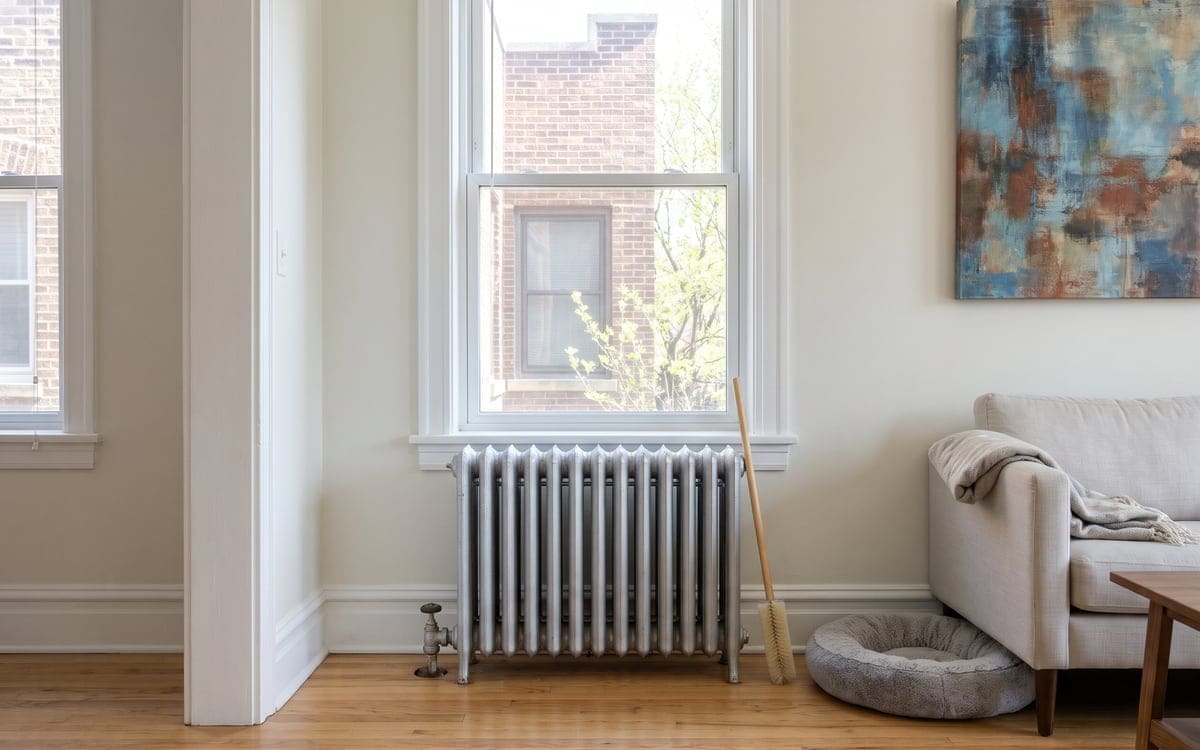
Dust settles between the columns all summer
Pet hair, carpet lint and ordinary house dust drift down into the gaps between the columns and sit there for months.
A dusty radiator smells warm when the heat kicks on
That warm, slightly singed smell on the day the heat kicks in is almost always dust. The surface of a cast-iron column runs hot once the system is on, and whatever is sitting on it heats up with it. In Chicago, the normal first autumn freeze at O'Hare comes on October 19.1 A fall deep clean is a natural place to put the pass.
Reaching the dust between the columns
The work is cold, done with the heat off and the radiator cool. The dust between the columns is reached from the top of the radiator with the gap worked one at a time. A damp cloth handles the fronts and the sides at the end.
Painted radiators get wiped, never scraped
Older radiators have been painted and repainted. A damp cloth lifts ordinary dust and smudges from the surface. A loose chip, a crack in the top coat or a visible rust spot is a repair item for the landlord or a painter. The same rule applies to peeling paint on the pipe, the valve housing or the baseboard behind the radiator.
The valve and the air vent stay with the plumber
Every cast-iron radiator has a valve at the inlet and, on steam radiators, a small air vent on the side. These two parts control how the radiator fills, how it releases air, and how hot it gets. Both are left alone during a cleaning.
A valve that hisses, drips or will not close is for the building. On steam, the air vent is a disposable part that whoever maintains the building replaces when it stops working. A tenant can call the landlord; an owner in a condo building can call the association. Nothing on the valve or the vent gets wiped, bled or opened during a cleaning.
Baseboard registers and wall grilles take the same pass
In newer buildings and additions, the heat comes through a baseboard register or a wall grille instead of a radiator. The dust problem is the same. The slats or louvers hold a season of lint, and the first morning of heat drives the smell into the room if nothing has been done. A soft brush between the slats and a vacuum below handle both. A grille with screws can be left on the wall; a cleaning does not take hardware off a wall.
If a return grille is dusty, we clean the face. The inside of the duct behind it is a different trade.
The regular rhythm, with the heat off and the radiator cool
Once the first full pass is done, the room's own dusting rhythm handles the surface between visits as long as the heat is off and the radiator cool. During the heating season the radiator stays alone, and the deeper pass between the columns waits for a spring clean after the heating season.
A radiator pass is part of a deep clean, not its own visit
A radiator is one of the surfaces a deep clean catches that a weekly rhythm does not. The gaps and the full brush pass belong to that visit or to a spring clean after the heating season, with the radiator cool either way. On a maid service visit the radiator stays off the list; its care goes in a visit that is set up for it.
How we treat each part of the radiator
| Part of the radiator | What builds up | How it gets cleaned |
|---|---|---|
| Top surface | Dust, pet hair, loose paper | Damp cloth, light pressure, wrung almost dry |
| Between the columns or fins | A season of lint and dust | Soft long-handled brush from the top, vacuum below |
| Front face | Fingerprint oils, kitchen film if close to a stove | Damp cloth with a drop of mild soap, then dry pass |
| Sides and back | Dust, cobwebs on the pipe behind | Brush, then damp cloth where reachable |
| Shutoff valve and air vent | Not a cleaning task | Left alone; no wiping, no tightening, no bleeding, no removing |
| Baseboard register or wall grille | Slats hold lint and pet hair | Soft brush between the slats, then vacuum below |
| Floor around the radiator | Dust that fell during the pass | Vacuum, then the normal floor pass |
Cleaning radiators in older Chicago buildings
The median year a Chicago housing unit was built is 1953,2 and about 39 percent of all units, 495,715 of them, were built in 1939 or earlier.3
Chicago also runs cold for a long time. The city averages 121.3 days a year with a low of 32 degrees or colder,4 which is a long heating season for the radiator to carry. The deep pass before the heat goes on, and the spring pass once the heat is off, bookend the stretch cleanly. Older Chicago apartments has more on the surfaces that come with the housing stock.
When a radiator is harder to reach
A long sofa pushed against a radiator, a side table with a lamp sitting on top of the top plate, or a floor-length curtain hanging in front of the column all keep a cleaning pass from doing its full work. Move what moves easily the day before the visit; the floor around a radiator stays clear through the pass, and anything that cannot move is noted on the way out so the household can decide whether to shift it before next time. Painted-shut covers or caging around a radiator are a different question: covers are gone over on the call, and one that is bolted in or painted shut stays on.
What to have ready before we come
A visit that includes a radiator pass takes less setup when the floor around the radiator is clear. Pulling a side table aside, moving a basket of magazines and giving us a path to the back of the unit is all it takes. What to have ready before we come covers this for every visit, and it applies here too. The radiator is cool before the pass starts either way.