The kitchen takes the longest list
Walk into the kitchen with a plan and work from the top down. High dusting is from the floor with an extendable duster, and anything out of reach is left alone; the hood over the stove collects grease that goes brown over the year. Pull everything out of the fridge and freezer, and run the dishwasher for a last cycle so the inside dries without a smell. The sink gets a scrub around the rim and under the lip of the faucet, where mineral spots build up. The stove comes apart the way the manual shows and goes back together once the drip pans, grates and burner caps have been cleaned. Counters get wiped twice, once for crumbs and once for the sticky ring that was under the toaster. Open every drawer. The crumbs at the back of a cutlery drawer are what the next tenant will notice first.
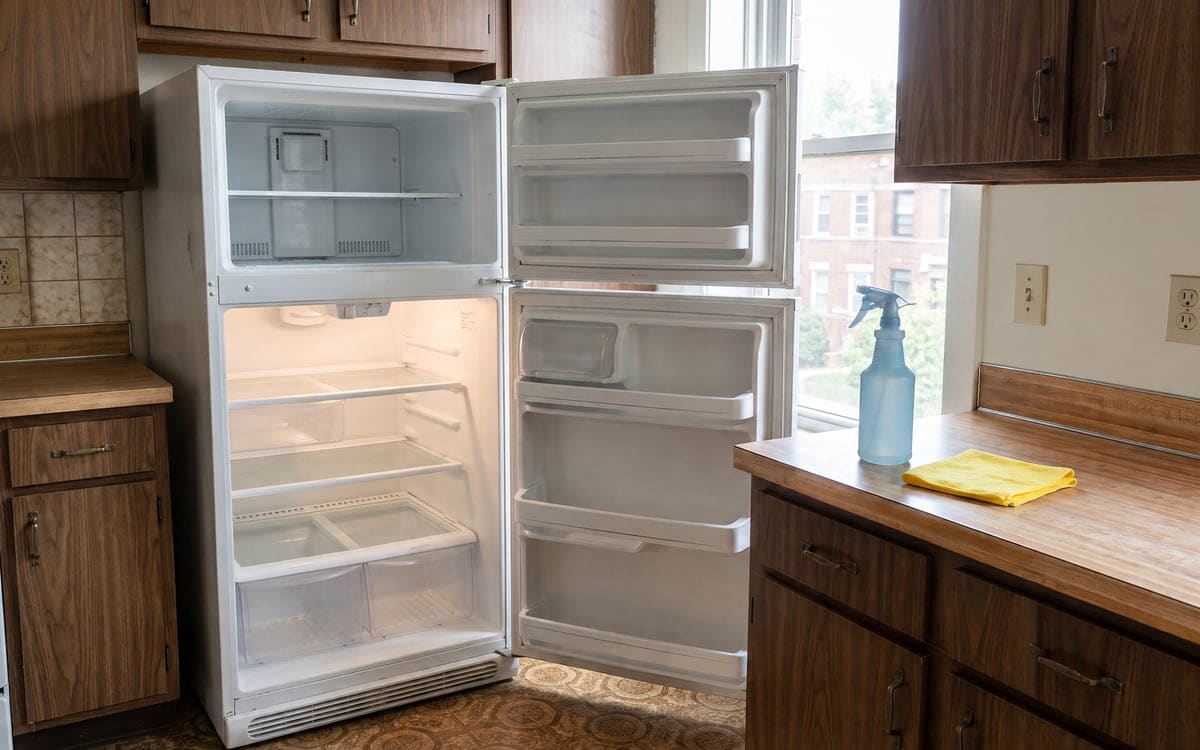
Appliances have to be emptied before they can be cleaned
A fridge still has yesterday's milk in it, so emptying comes before cleaning. Toss anything that is past, bag the rest for a cooler, and pull out the shelves. Wash them in the sink, dry them, slide them back. The oven is the same, with racks that come out and a floor that holds spills from months ago. Skip oven cleaner from a can, and never pour drain cleaner into a slow kitchen drain to save a step. If a product in the cabinet is old or near the bottom, Chicago has a city facility for cleaning products you cannot take with you to the next place.
Bathrooms need the most scrubbing per square foot
A bathroom is small, and that is the problem. Hard-water film on the shower glass, soap on the tile, mildew in the grout lines, hair in the drain, dust on the top of the mirror frame, and the gap behind the toilet all live in one room. Work the tub or shower first because it takes the longest to dry. Scrub the grout where it has darkened. Lift the toilet seat and wipe the hinges. The vanity top, the mirror, the inside and outside of the medicine cabinet and the baseboards behind the door come last. Never mix bleach with ammonia, vinegar or any other cleaner.
Closets and cabinets get opened and looked inside
Every closet gets a look inside, including the one in the hall. Pull out the shelf liners if they are old, wipe each shelf you can reach standing on the floor, and vacuum the closet floor with a wand attachment. Anything that would need a stool or chair to reach stays alone. The same goes for every cabinet door the kitchen checklist already covers, plus the linen closet and the hall closet by the door. Check for anything taped to a wall or the inside of a cabinet door, because landlords find it and renters forget it.
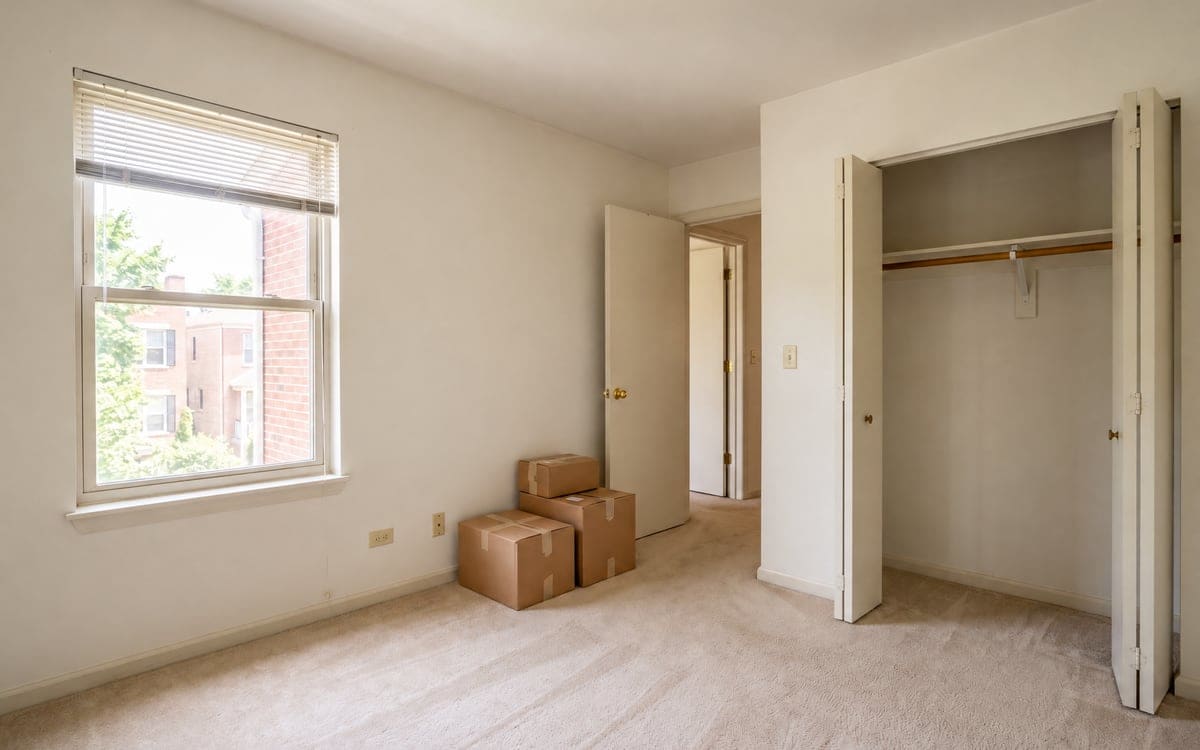
An empty room shows every scuff
A living room with furniture in it looks fine. The same room with the furniture gone shows every scuff on a wall and every nail hole next to the window. For light scuffs, use a soft damp cloth, and test a hidden spot first; damaged or peeling paint belongs to the landlord, not to a scraper. Dust the baseboards and the tops of the window and door frames that you can reach from the floor. If radiators have been painted shut and the covers do not come off, run a dry duster between the fins. Vents and switch plates finish the room.
Windows and tracks hold a winter of grit
The inside of a window collects a thin film over time. Clean the glass with a flat squeegee or a lint-free cloth, and then clean the track. Tracks are where salt, grit and dead flies collect, and a cotton swab is often the right tool. If a storm window comes in from the inside, give the inside pane a wipe. The outside of any window is for a window cleaner, not for a renter leaning out, regardless of what floor the apartment is on. For winter grit on floors that got dragged in across the season, mop the entry twice and change the water in between.
Floors go last, toward the door
Floors are the final step. Vacuum every room, under where the bed was, under the couch, and the carpet in a bedroom closet. Wet-mop a hardwood floor only if the finish is in good shape, and use less water, not more. Tile and vinyl take a damp mop with a mild cleaner. Work from the far corner of the apartment toward the front door, so you do not walk back across what has already dried. The sheet below is one way to keep the sequence on a single page.
| Room | What to clean | Easy to miss |
|---|---|---|
| Kitchen | Inside and outside of the fridge and oven, stovetop pieces, hood, cabinet fronts and interiors you can reach, drawers, counters, sink | The reachable front edge under the fridge, the backs of drawers, under the toaster |
| Bathrooms | Tub or shower, tile and grout, toilet inside and out, vanity, mirror, baseboards | Behind the toilet, inside the medicine cabinet, the shower-door track |
| Bedrooms | Baseboards, window and door frames you can reach, vents, closet floor and reachable shelves | Behind the door, the inside of the closet door, where the bed stood |
| Living areas | Switch plates, baseboards, radiators, window sills, scuffs on walls | Cords and the floor around the TV wiped dry, radiator fins, where furniture stood |
| Floors | Vacuum carpets, damp-mop hard floors, work toward the door | Transitions between rooms, the reachable front edge under the stove, closet carpet |
| Entry | Mop the entry twice, wipe the inside of the door | Door frame, threshold, mail slot |
Most Chicago rentals fall under the city's landlord and tenant ordinance
The Residential Landlord and Tenant Ordinance applies to every rental agreement for a dwelling unit in Chicago, with a short list of exclusions in the code. Those exclusions cover units in owner-occupied buildings of six units or fewer (two provisions still apply), hotel, motel, inn, bed-and-breakfast and rooming house units until a tenant has stayed 32 or more continuous days and pays monthly rent, dormitories and student housing run by or tied to a college, co-op units held on a proprietary lease, and a few other cases. Most Chicago rentals are still covered. Among the rights and obligations the ordinance covers are the tenant's general responsibilities, the landlord's right of access, security deposits and prepaid rent, and the landlord's general duties.
Chicago's landlord ordinance frames most leases and settles the deposit questions a cleaning crew cannot.
Keep the lease summary, the keys and the photos together
The ordinance requires the landlord to attach a summary of it to each written lease and renewal, and to give the summary to a tenant where the rental agreement is oral. Security deposits are among the rights the ordinance covers, so deposit questions on a particular lease go to the summary attached to that lease. Keep the summary with the keys and with photos of each room taken after the cleaning. More than half of Chicago's households rent rather than own, and about 42 percent of renters moved in during 2020 or later; a move is probably on your block this week. For questions the summary does not answer, the city's housing office or a tenants' rights attorney is the next step.
What belongs to the landlord or another trade
Holes and paint belong to the landlord or a painter, and the lease says what it says about who patches and who repaints. Peeling paint on an older window sill is for the landlord, since paint layers in older buildings should not be sanded or dry-swept. Carpet shampooing, duct work and anything that smells musty or spreads on drywall after a leak are other trades. If the whole empty apartment needs help on the last day, a move-out cleaning works through an empty space from top down, and the new place can be cleaned before the furniture arrives. Getting ready for a cleaning has the short list of what to tell us on the call.