The City's household chemicals facility
The household chemicals and computer recycling facility, run by the City's Department of Environment, accepts old cleaning products from residents. The schedule and the address are on the City's page.1
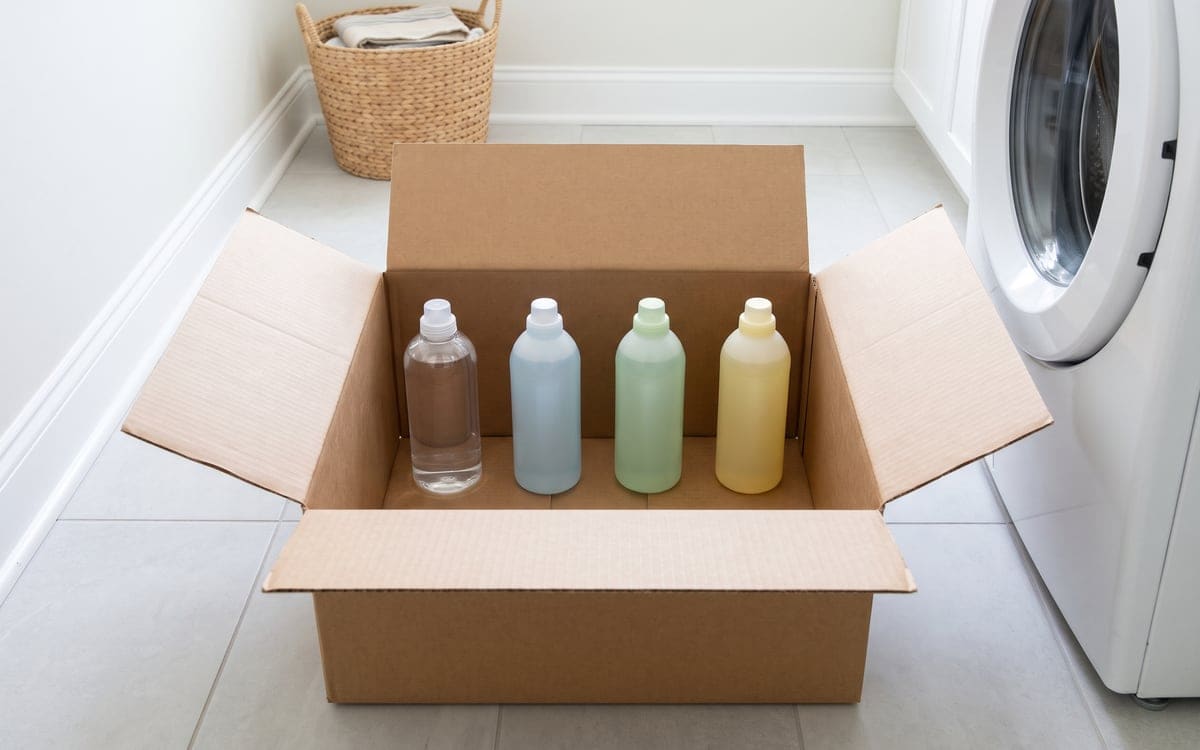
The facility accepts bleach, harsh cleaning materials and drain cleaners,1 along with batteries, oil-based paints, aerosol cans, solvents, compact fluorescent bulbs and mercury items like thermometers and old thermostats. Drop-offs are from residents only; businesses and large groups must work with a private disposal company,1 so a cleaning crew cannot drop off anything on a household's behalf. If a visit finds a bottle you want out, the household drives it to the facility.
Keep products in their original containers
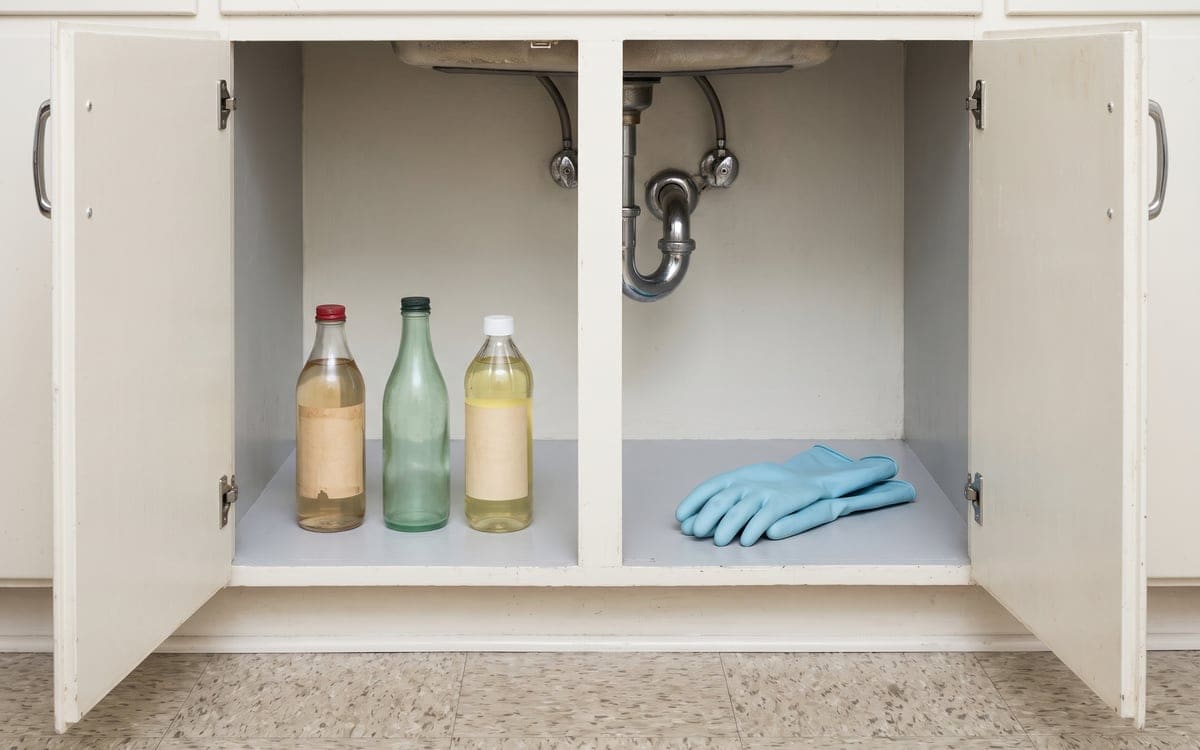
Pouring the last of a product into another bottle to save shelf space causes problems. The original container is labeled, with the ingredients, the warnings and the first-aid instructions on the back. A product repoured into a water bottle looks like water, and a kitchen is not a lab where unlabeled solutions sit for long without becoming a question later. Keep products in the bottles they came in, capped, until they are either used up or taken to the facility. The same goes for bottles that get moved from the kitchen cabinet to the garage or the basement; a bottle that leaves its usual shelf still needs its own label, so the person who finds it later can tell what it is without opening it.
A second habit that pays back is keeping each product in its own corner of the cabinet, far enough from the others that a lid giving up does not reach any of them. A bottle that has started to seep, or a trigger that no longer closes clean, goes in a box for the facility.
Never combine leftovers to save space
Never mix bleach with ammonia, with vinegar, with another acid, or with any other cleaner, regardless of what a video or a recipe says. The reaction produces a gas that can send a person to the hospital. Keep bleach in its own bottle, in its own corner of the cabinet. If a container has lost its label, do not pour it into another one; keep it capped and apart from other products. If a container is leaking, check the City's facility page1 for how to handle it before moving it.
Moving day is when the cabinet under the sink gets cleared
A move-out often turns up old products that were worth keeping once and are now worth getting out of. A move-out cleaning is a good moment to go through the cabinet under the sink. Pull everything out, sort what to keep from what to take to the facility, pack the keeps with the kitchen, and set the drop-offs in a box by the door. If the cleaning is for the next place too, move-in cleaning is a good moment to start fresh instead of hauling the old cabinet along. The move-out checklist has the room-by-room version.
Using up a product versus getting rid of it
A product that is still good and still useful is a product to use up. Half a bottle of a floor cleaner the household likes stays on the shelf. A product that is past, that smells wrong, that no longer has a label, that has separated, or that the household has decided to stop using goes to the facility. A walk through the cabinet with a box for the drop-offs clears most of what is accumulating.
A good rule for a cabinet is that nothing with a damaged seal or a dented top stays in long-term use. A can of oven cleaner with a stuck button, a trigger sprayer that is seeping, a cap that no longer closes properly: each of those is a candidate for the drop-off box, since a container that is not keeping the chemical where it belongs is a container the next shelf accident finds first.
For a product the household wants to stop using but still has nearly full, there is no shame in setting it aside for the facility. A full bottle of oven cleaner that nobody is going to touch is more useful in the drop-off box than it is on the shelf, where it is one of the products the never-mix rule works hardest to protect. A full bottle of a bathroom cleaner that irritated someone's skin is the same case: the facility is the place for it.
Fewer products on the shelf, less to get rid of later
A smaller cabinet of cleaning products is easier to look after. A household that keeps a general bathroom cleaner, a general kitchen cleaner, a glass cleaner, a floor cleaner for the right finish, a scouring powder and a bottle of white vinegar for descaling can do most routine cleaning with that short list. Specialty products that get used once a year end up in the drop-off box; a cleaner the household bought for one spot that is now gone has done its job. For a household that wants to start with milder products on an upcoming visit, a deep clean is a reasonable moment to start, since a deep clean touches surfaces the household has not seen in a while. What a cleaning includes is the longer list of what runs in a standard visit.
When a bottle has lost its label
A bottle without a label is the hardest case. Do not relabel it from memory; a wrong label on a chemical is worse than no label. Mark the bottle "unknown" and keep it apart from other products in the cabinet. Do not sniff a bottle to identify it, since some fumes from household chemicals are harmful to breathe. For unlabeled containers, the City's page for the facility1 is the right place to check before dropping anything off.
Driving a box of chemicals to the facility
For the drive, keep bottles capped and upright in a sturdy box, with the different products never set next to each other. The City's page1 covers anything else about transport. Two products that live apart in the cabinet should not touch in a box on the drive.
The box also deserves its own trip. If the drop-off is on the way to somewhere else, the box can wait at home for a separate run rather than share a trunk with groceries. Once the box is at the facility, the staff takes over from the household.
What goes where, and what never mixes
| Product | Where it goes | Never mix with |
|---|---|---|
| Bleach | City household chemicals facility, if past; or use up | Any other product |
| Harsh cleaning materials | City household chemicals facility | Any other product |
| Drain cleaners | City household chemicals facility | Any other product |
| General kitchen or bathroom cleaner | Use up, or City facility if past | Any other product |
| White vinegar | Use up for descaling | Any other product |
| Oven cleaner | City household chemicals facility | Any other product |
| All aerosol cans | City household chemicals facility, per the City's list | Any other product |