Regular visits
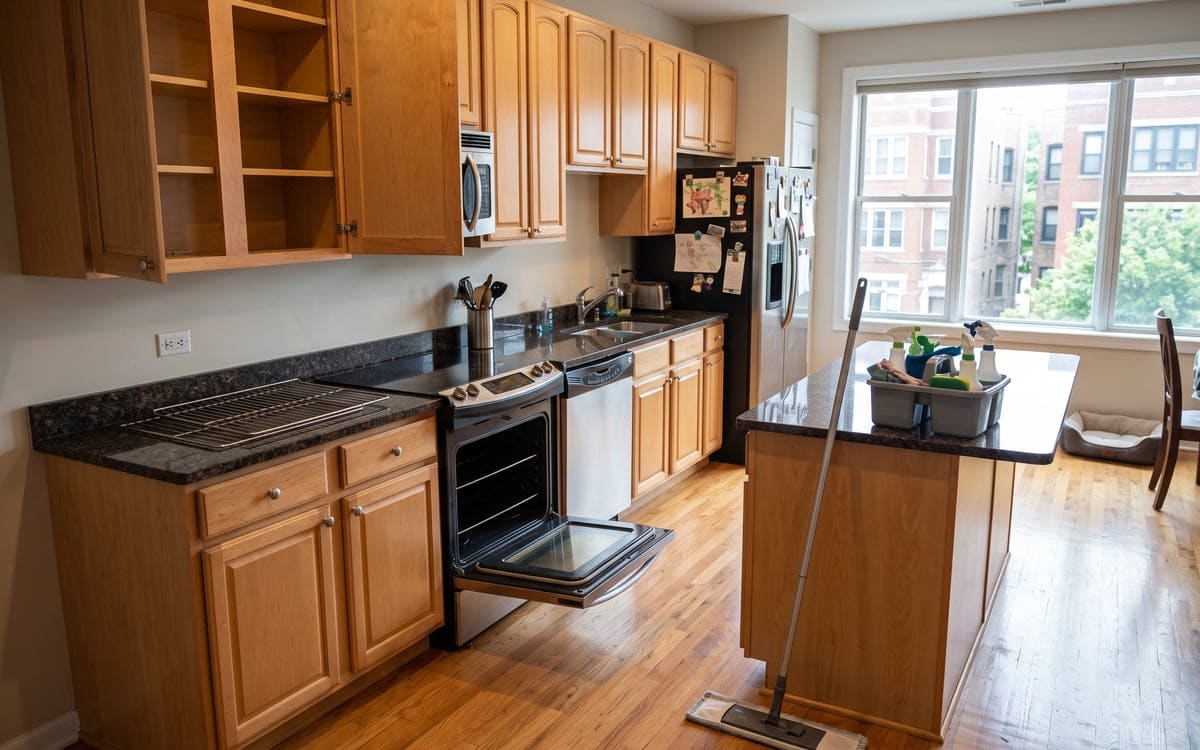
A regular visit covers the places that need resetting every week or two. Counters, the sink, the stovetop and the outside of appliances in the kitchen; the tub, the toilet, the vanity and the mirror in each bathroom; dusting from the floor up, with the floors last. What a standard cleaning includes has a longer room-by-room list. A regular visit keeps a house in the shape it was in at the end of the last visit; it is maintenance.
The deep clean
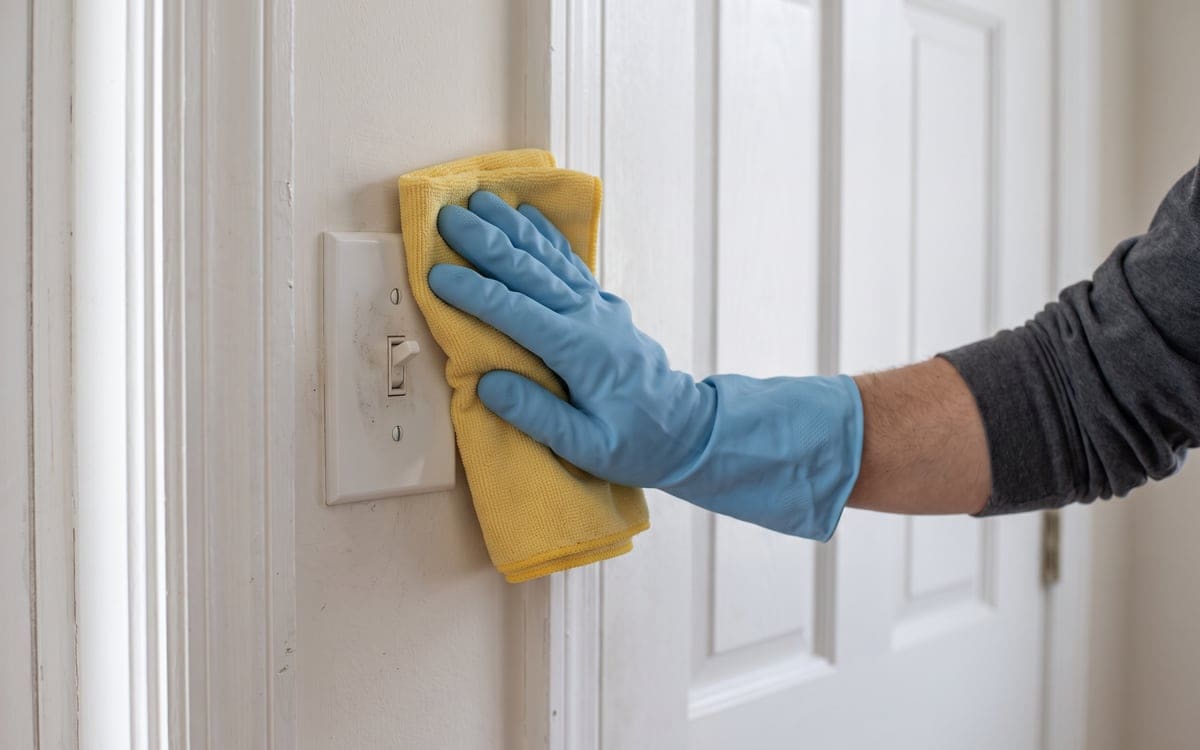
A deep clean goes to the places the eye skips. High spots like the tops of cabinets and the ceiling fan blades are dusted from the floor, and anything out of reach stays alone. On the ground, a deep visit works on the dust on the hood over the stove, the baseboards, the grout in a shower and the hard-water film on the glass, the window sills and the switch plates behind the kitchen door, with the inside of the oven and the fridge included when a household asks for those. A regular clean passes over this layer because it is working on the layer above. Over a year, the layer below settles in, and that is what a deep visit is for.
The first visit
Even in a tidy household, the ledge above the shower door and the baseboard behind the chair have been collecting since someone last felt like crawling after them. So the first visit is often a deep cleaning before the household starts a weekly schedule, and the regular visits that follow stay regular because the deep layer is already done. Starting a schedule without a deep visit first usually means a first visit that still has to carry the deep layer, which then shows up on the second visit and the third.
Older buildings
Chicago has a lot of older housing stock. The median year built is 1953,1 and about 39 percent of housing units were built in 1939 or earlier,2 the biggest group in the census table. Old buildings collect dust in different places than newer ones: cast-iron radiators with fins the vacuum cannot reach, deep window sills with sashes that stick, plaster walls that shed a fine white powder when a nail is pulled, original tile with grout that darkens, and wood floors that pull dust into the corners of each board. A deep visit in a vintage apartment spends more time on the radiators and the sills, and less on surfaces that would be done in a newer home. Older apartments have their own list.
Kitchens and bathrooms
Within either kind of visit, two rooms account for most of the work. The kitchen and the bathroom hold more places where water meets residue than any other room, so they take the longest and show the biggest difference between a regular pass and a deep one. In a kitchen, the regular pass handles the counters and the stovetop; the deep pass works on the hood, the reachable front edge under the appliances with the appliances left in place, the cabinet fronts, and the inside of the oven and fridge when the household wants that. The tops of the cabinets are dusted from the floor, within reach. In a bathroom, the regular pass handles the tub, the sink and the toilet; the deep pass works the grout, the shower glass, the baseboards behind the door and the gap behind the toilet.
A move-out clean
A move-out cleaning is a deep clean done without the household's belongings in the way. Cleaners can reach the floor of the closet, the full length of each baseboard, the inside of every reachable cabinet, and the window frames you can reach from the floor, because nothing is sitting in front of any of them. The appliances still stay in place; the reachable front edges under them get a wipe when they would be hidden otherwise. In a lived-in home, a deep visit works around the furniture and the laundry basket; a move-out visit starts in an empty room and works through to the floor.
Recurring visits
A deep clean is the first big reset; recurring visits after it keep the buildup from returning. More frequent visits slow the rate at which the deep layer comes back, so a household on a weekly schedule usually goes longer between deep visits than a household that cleans less often. How often to schedule walks through the trade-offs.
A spring clean
Some households time a deep clean to the calendar instead of to a judgment call. A spring clean is a deep clean someone may choose to put on one date each year, which is a workable way to keep deep visits from drifting. The reasons a household chooses that date are its own; the deep clean itself is the same work, carried out on a day the household has already set aside.
When each visit fits a Chicago home
The usual signals for picking which clean a home needs first.
When a regular clean keeps up
- The home was deeply cleaned recently.
- The kitchen and bath are kept at one level.
- A rhythm is already in place to stay there.
When a deep clean comes first
- It has been a long while since a top-to-bottom clean.
- A new household is moving in or arriving.
- A season change, a renovation, or a stretch of heavy cooking.
Side by side, room by room
A side-by-side shows what tends to shift between a regular visit and a deep one.
| Area | Regular clean | Deep clean |
|---|---|---|
| Kitchen counters and sink | Wiped, dried, sink scrubbed | Same, plus under the toaster, behind the kettle, around the base of the faucet |
| Stove and oven | Stovetop wiped, drip pans wiped | Stovetop pieces disassembled; hood and filter cleaned; inside of the oven when asked |
| Refrigerator | Outside wiped, handles cleaned | Shelves pulled, interior wiped, seals cleaned when asked |
| Bathroom tile and tub | Tub and shower scrubbed, soap scum removed | Grout worked, hard-water film on glass addressed, baseboards wiped |
| Toilet | Bowl, seat, rim and exterior | Same, plus behind the base and the hinges on the seat |
| Dust surfaces | Reachable surfaces top down | Cabinet tops from the floor, fan blades from the floor, baseboards, switch plates |
| Floors | Vacuumed, hard floors damp-mopped | Same, plus under light furniture that moves easily, closet floors, the corner behind the door |
| Windows | Fingerprints on inside glass | Sashes, sills and tracks on windows you open from the inside |
How to tell which one your place needs
Where the dust shows is the fastest read. The top of a door frame, the baseboard behind a chair, the inside of the shower-door track, the top edge of the hood over the stove, and the window sill in the room farthest from the entry each tell a similar story: a layer of gray on more than one of them puts the home ahead of a deep clean, where a standard maid service visit covers a home that stays mostly clean on one or none.
A second check is the smell. A kitchen that smells of its hood after a weekly visit usually has grease on the filter that a regular pass did not reach, which is the sign the deep layer is overdue in that room.
What a deep clean does not fix
A deep clean does not patch a hole in drywall, strip and refinish a floor, repaint a window sill or restore grout that has crumbled past cleaning. We clean small surface spots on tile and grout only. Spreading growth, growth on drywall or wood, musty smells or anything after a leak goes to a mold professional, and dust from a renovation that still has drywall powder in the air goes to a post-construction clean.