What actually darkens a wall over a year
Dust settles on any horizontal part of the wall, especially the top of trim, the picture rail and the ridges in a plaster finish. Cooking film drifts out of the kitchen and lands anywhere air circulates, so the walls near the stove go first and the hallway walls follow by winter. Finger oils concentrate around light switches, door frames and the top of a chair rail, where the wall right along the path through the room goes darker than the wall across it.
None of those is a hard clean. They lift with water and a touch of mild soap. The reason walls stay dingy is less about the stain than the setup: most people skip the bucket and a thorough top-down pass. Anything above an arm's reach from the floor gets an extendable duster, never a chair.
A damp microfiber cloth lifts more than people expect
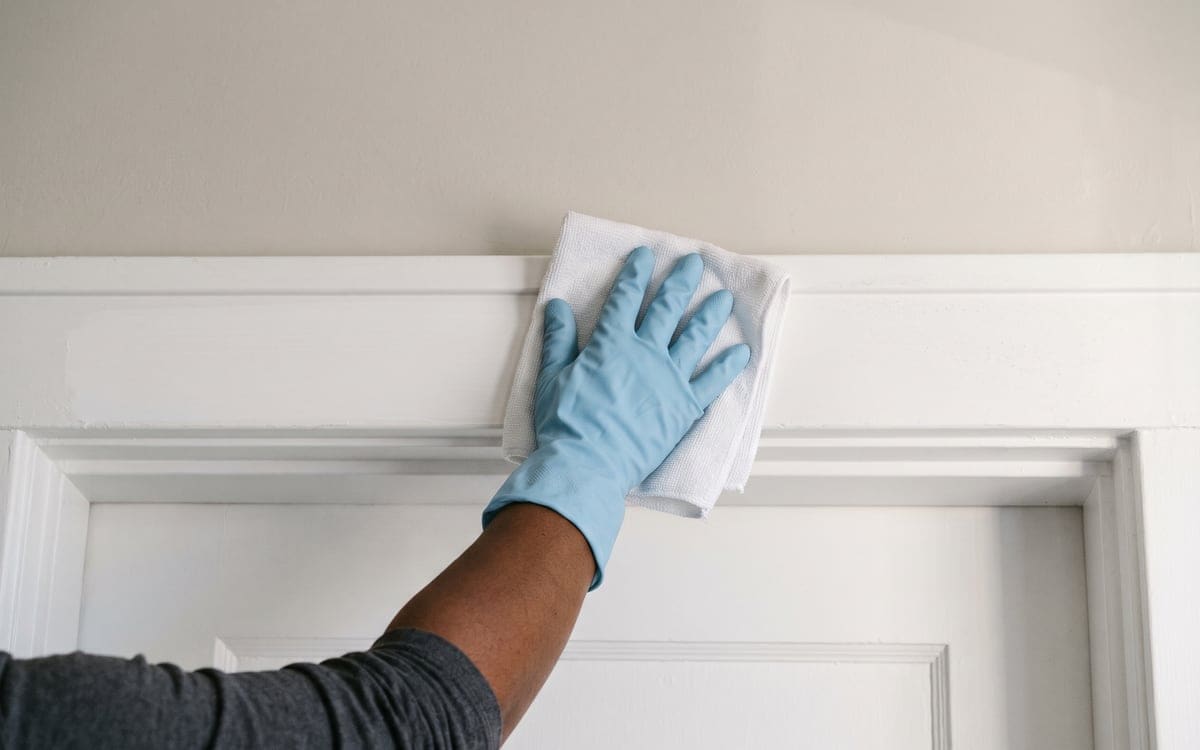
The default tool for a wall is a flat microfiber cloth that has been dipped in warm water and wrung out until it feels damp, not wet. On a painted wall, that cloth lifts most dust, almost all finger marks, and a surprising amount of cooking film from the hallway and the kitchen door. The damp pass goes top to bottom in long strokes as high as can be reached from the floor, with the cloth turned to a clean side every few feet and rinsed every two walls; anything above arm's reach gets the extendable duster only.
A spray bottle is almost always too much water for a wall. Spraying water onto a painted or plaster wall lets drips run, and drips leave the thing you were trying to remove: a line. The dip-and-wring method keeps the water in the cloth and off the wall.
Plaster walls take water in small amounts, never a soak
Plaster walls are common in older buildings in general. The signs are easy to feel: the wall is hard and cold under the paint, the trim is deeper than drywall trim, and the corners are often slightly curved rather than crisp. Plaster takes water in small amounts, which the damp microfiber provides, but it does not want a soak. Too much water on an old plaster wall seeps toward the lath behind it and risks a bloom later.
A damp cloth, worked top down, is safe. A spray bottle, a wet sponge or a long leaky mop is not. On an old plaster wall with a crack or a visible repair, the cleaning stays well clear of the crack; the crack is for a plasterer or a painter.
Painted drywall takes a soft touch and the right wring on the cloth
Drywall is more common in newer and rehabbed units. The wall is lighter and warmer under the paint, the trim is thinner, and the corners are crisper. Drywall tolerates water a little better than plaster, but the paint on it still decides what the cloth can do. The cloth test is the same: damp, not wet, and the pass goes top down.
The one real risk on drywall is a soft wet patch at a seam, where the tape and the compound could soften if water sits on them; a wet sponge can soak a seam that long, a wrung microfiber will not.
Flat and matte paints mark more than eggshell or satin
The sheen on the paint is the biggest thing deciding how a wall cleans. Flat and matte sit at the hard end, where the finish is porous and some marks live inside the texture rather than on top of it. Eggshell is friendlier, satin friendlier still, and semi-gloss and gloss are the easiest to wipe. On flat and matte, the plan is to clean lightly and often rather than hard and once.
A spot that will not lift with a damp cloth on flat paint is usually a candidate for touch-up paint, not a harder scrub.
Fingerprints around light switches and door frames get a dedicated pass
Every room has a few spots that darken sooner than the rest of the wall. Light switches, door frames and chair rails all catch finger oils from the hands that pass by them, which is why those spots are candidates for a dedicated pass with a slightly stronger cleaner than the rest of the wall.
A drop of mild dish soap in a quart of warm water, applied with a damp microfiber, is a safe start for most finishes. On a switch plate specifically, keep the cloth almost dry and stay well clear of the switch opening and the screw holes; the wall right around the plate takes the regular damp pass. Harsher cleaners strip gloss off eggshell before they strip the oil off it, and the pressure stays light either way.
Scuff marks lift with a soft sponge, not a scrub pad
The dark smudges that show up on the wall by furniture, by shoes left in the hall, or anywhere a vacuum head bumps are scuff marks. Scuff marks are usually pigment transfer from a rubber or plastic surface onto the paint. A soft melamine sponge, used with a light touch and a wet corner, lifts most scuff marks without taking the paint.
The warning stays the same: a melamine sponge is a mild abrasive, and used hard it will burnish or dull the paint. Use it lightly and wet. On an older plaster wall with soft paint, test a spot behind a door first.
Peeling or flaking paint is for the landlord or a painter
If the paint is lifting at the seam, flaking off a strip of trim, or coming off in small pieces along the baseboard, that is not a cleaning problem. The cleaning never scrapes, sands or dry-sweeps paint off a wall or trim. We write the spot up as a repair note on our way out.
In a rental, the landlord gets the call. In a condo, it is a conversation with the association or an owner's own painter.
Water temperature, wringing and the clean side of the cloth
| Variable | How it works | How we set it |
|---|---|---|
| Water temperature | Warm water lifts oils more readily than cold | Warm, not hot: hot can soften some paints at the edge |
| Soap | Mild dish soap in a bucket | A drop, not a pour; strong soap leaves a residue |
| Cloth type | Flat microfiber holds water and releases dust | White or unprinted, so dye transfer is a non-issue |
| Wring | How wet the cloth meets the wall | Damp to the touch, not dripping; test on a glove |
| Direction | Up-and-down or left-and-right | Top down, in long strokes, so drips never go up |
| Side of the cloth | Which face meets the wall | Rotate to a clean side every few feet |
| Rinse rhythm | How often the cloth goes back in water | Every two walls or when the water looks gray |
A wet cloth meeting dust below it is where streaks come from, which is why the direction is top down and the cloth is turned and rinsed on the schedule the table sets.
How to clean walls in a Chicago apartment, start to finish
A whole-wall wash is a household job rather than a listed service: a damp microfiber, warm water, a top-down pass, one wall at a time. What our visits do touch is the hand-oil zones on the wall. A deep clean wipes switch plates and handles, door frames top to bottom, and painted trim. A move-out cleaning spot-cleans scuffs and marks on walls for a tenant on the way out. On a maid service visit switch plates, door frames and baseboards sit in the "what moves it to a deep clean" column, so they are picked up when a deep clean is on the visit.
Plaster shows up often in older buildings in general. In Chicago, about 58 percent of housing was built before 1960,1 and the walls in older stock want water in small amounts and no strong cleaners.
Older Chicago buildings and the walls in them
In a vintage apartment, the plaster under the paint is older and the finish is more delicate. Older Chicago apartments covers the radiator, the hex-tile bathroom, the oak floors and the plaster walls together.
What to have ready before we come walks through the clear-the-counters, point-things-out part. What a cleaning includes covers which rooms the pass walks through and in what order.