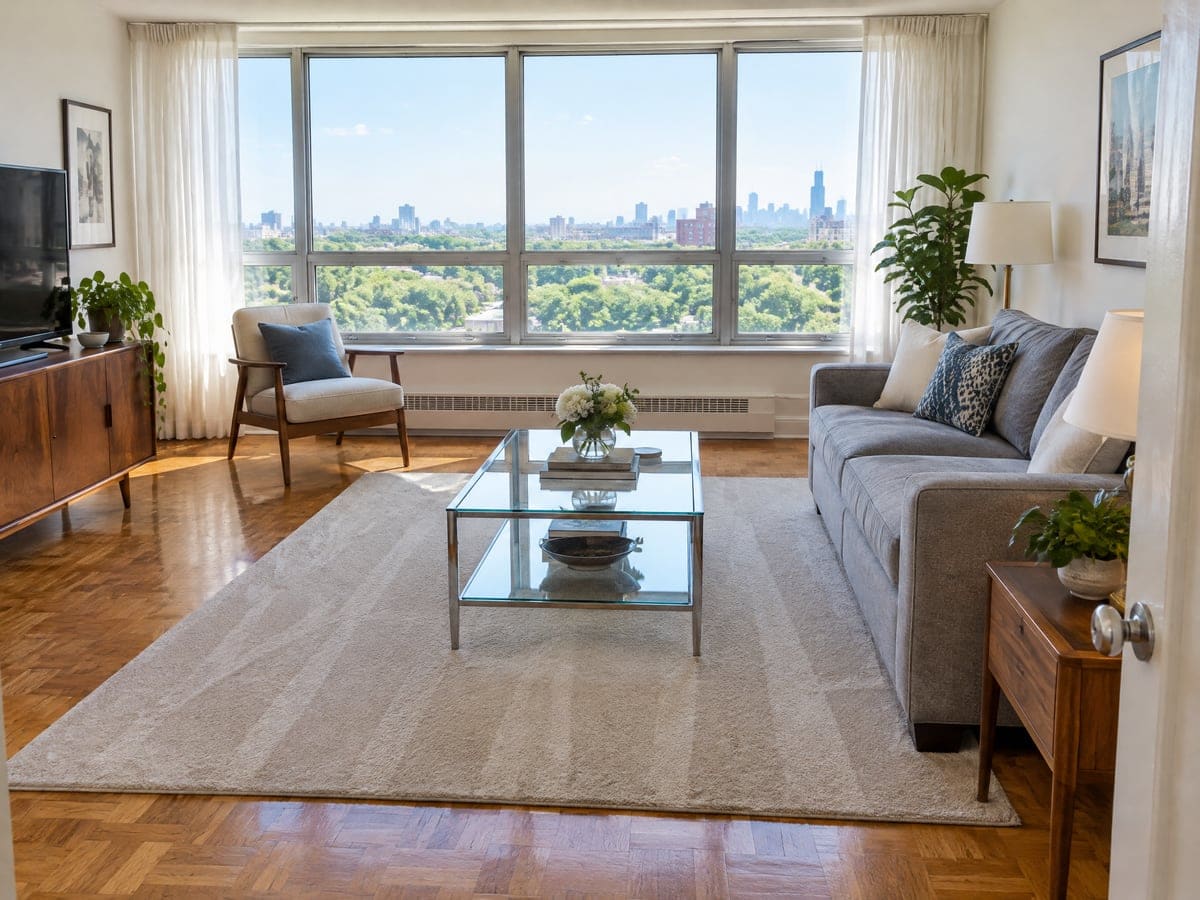
Getting a cleaning into your building
Getting into the building is a big part of planning the visit. Our cleaners work through the unit the same way as any other home, but the questions on the call are different in a building than in a single-family house.
1. How we get in: buzzer, keys, a front desk or a door attendant
The first thing on the call is how we open the front door. A buzzer that works, a key fob, a lockbox at the back door, a key under a mat you tell us about, a front desk that will let us up, or a door attendant with a clipboard. We go over which one applies to your building. If a buzzer is broken, we need either a tenant home or an alternate way in.
2. Stairs in a walk-up, elevators in a larger building
A three-flat with no elevator means a caddy up two flights of stairs; a mid-rise or tower with a service elevator means a few questions about hours and access. Ask your building whether a cleaning company needs to be on a list, or whether cleaning hours are limited by the lease or the condo rules, then tell us on the call.
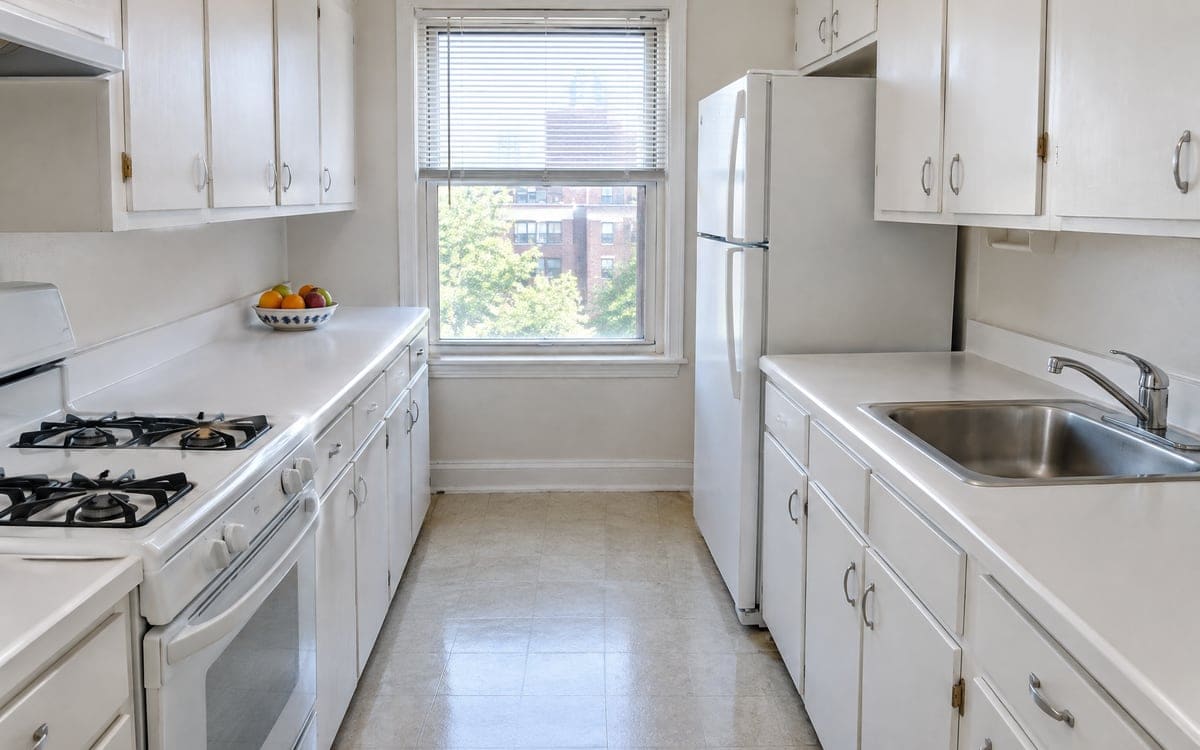
3. Small kitchens and galley layouts
A galley kitchen is narrow and single-sided or back-to-back, so one cleaner is in it at a time. Counters, sink, stovetop and the outside of appliances are the same work as in a larger kitchen, and the backsplash tends to carry more cooking spray because the stove sits close to it. A small kitchen takes a touch less to walk through, but the stovetop and sink work are the same, so plan on a comparable pass for both.
4. One bathroom shared by roommates
The toothbrushes on the counter are not sorted or moved. If the shower curtain is still wet, we work around it. The vanity gets wiped around what is on it, not under it, unless a roommate has cleared the counter. Tell us on the call if any of the three toothbrushes are not supposed to be there anymore; we are not here to settle the house.
5. Your unit only
The hallway outside the door, the laundry room one floor down, the lobby, the stairwell and the trash chute are all the building's. We clean inside your apartment, condo or loft and nothing else.
6. Condo owners and renters alike
The questions on the call are the same whether you own the condo or rent it. The difference is which document carries the rules for your building, and that is something you check on your side and tell us about on the call.
| Building | What changes for the visit | What to tell us on the call |
|---|---|---|
| Two-flat | Front stairs, back stairs, no front desk | Which door we come in and who else lives below |
| Three- or four-flat | Walk-up to your floor, shared entry | Buzzer or key, and any back-door rule |
| Courtyard building | Multiple front entries off a courtyard | Which entry number is yours |
| Mid-rise | Elevator, sometimes a service elevator | Elevator hours and whether we need to call ahead |
| High-rise with a front desk | Front desk check-in | Whether we go on your list and your unit number |
| Loft | Open plan, high windows, exposed brick | Which windows we can safely reach from the floor |
If you want more on vintage buildings specifically, see vintage apartments for what plaster, radiators and original tile add to the clean.
When apartment cleaning fits, and when another service does
When this is the right page
You live in an apartment, a condo, a loft or a unit in any building bigger than a single-family home, and you are not moving out. The visit is for the inside of your unit. Whether that is one visit or a regular one is gone over on the call.
When another service fits
If the apartment is empty, an empty unit at move-out or a new apartment before move-in are the right pages. For a recurring arrangement that keeps the apartment at one level, see a recurring visit. For a standard room-by-room visit without the apartment-specific questions, see a regular maid service visit.
If a lot has built up in the apartment and the kitchen cabinets, grout and radiators have been waiting on a thorough clean, a deep clean is the right first visit. For the questions worth running past the building before the day of, see what to sort out with your building.
What the visit covers in an apartment
The clean itself is the same as any home: dusting from high to low, the kitchen and bathrooms, bedrooms and living rooms, and the floors last. The parts that differ are what we check on the call: the elevator or the stairs, the front door or the front desk, the one bathroom shared by the household, the galley kitchen, and whether you are home or at work when we come. The condo rules or the lease decide what the building allows; we work inside those.
We clean your unit, not the building. If the hallway outside your door is dirty, that is for building management. If the laundry room downstairs needs a wipe, that is also for the building. The one line that gets crossed sometimes is the hallway floor directly outside your door, where boots on move-in day or a spill from the trash chute can leave a mark; we clean inside your doorway and tell you if the hall outside it needs a word with management.
From your call to the elevator
- You call us with your address, the floor, how we get in the front door, and anything your building needs us to know.
- We go over products, pets and what the inside of the unit covers.
- You get a price for the visit and decide.
- The cleaning happens, and we walk the apartment with you at the end if you are home.
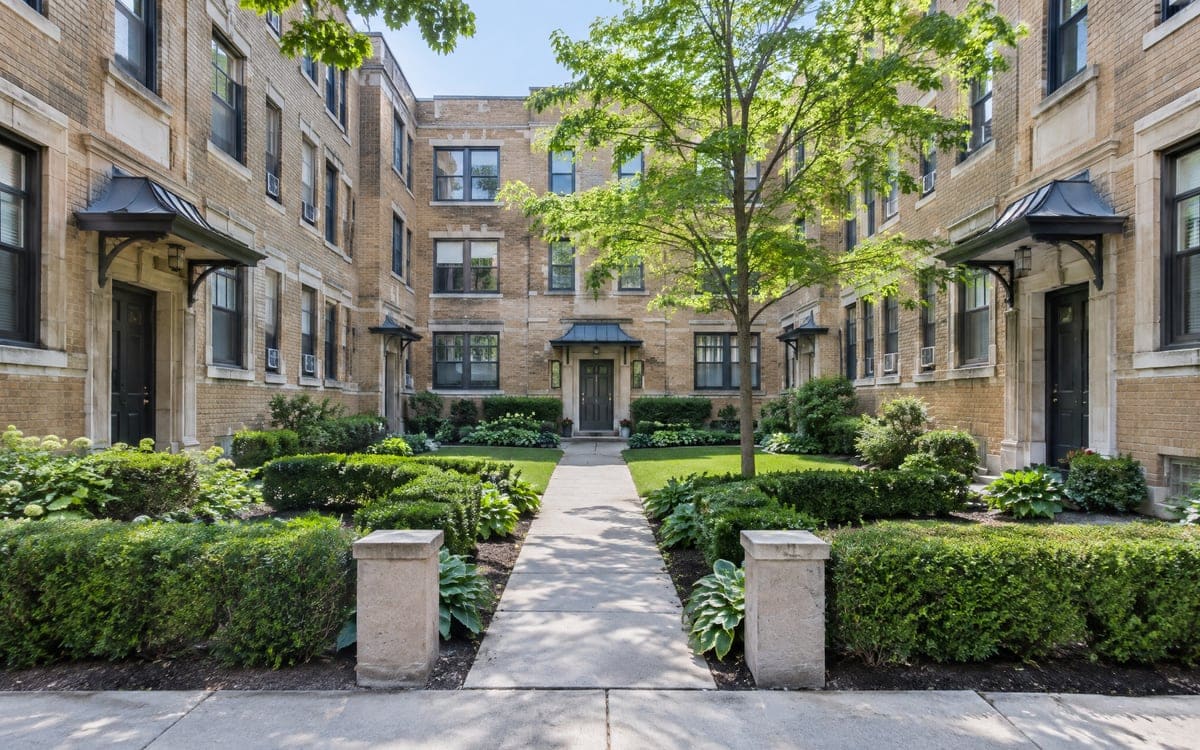
How Chicago lives in apartments
Chicago is largely an apartment city. About 57 percent of Chicago's housing units (722,657) are in buildings of one to four units, and about 27 percent are in two-, three- and four-unit buildings. At the other end, about 20 percent of Chicago housing is in buildings of 50 or more units, and 43 percent of all units are in buildings of five or more. Renters occupy about 54 percent of Chicago's occupied homes, and about 40 percent of households are one person living alone. Related apartment cleaning calls on the site include apartment cleaning in the Gold Coast and cleaning in Edgewater.
Chicago's housing covers everything from a brick single-family to a tall apartment tower.