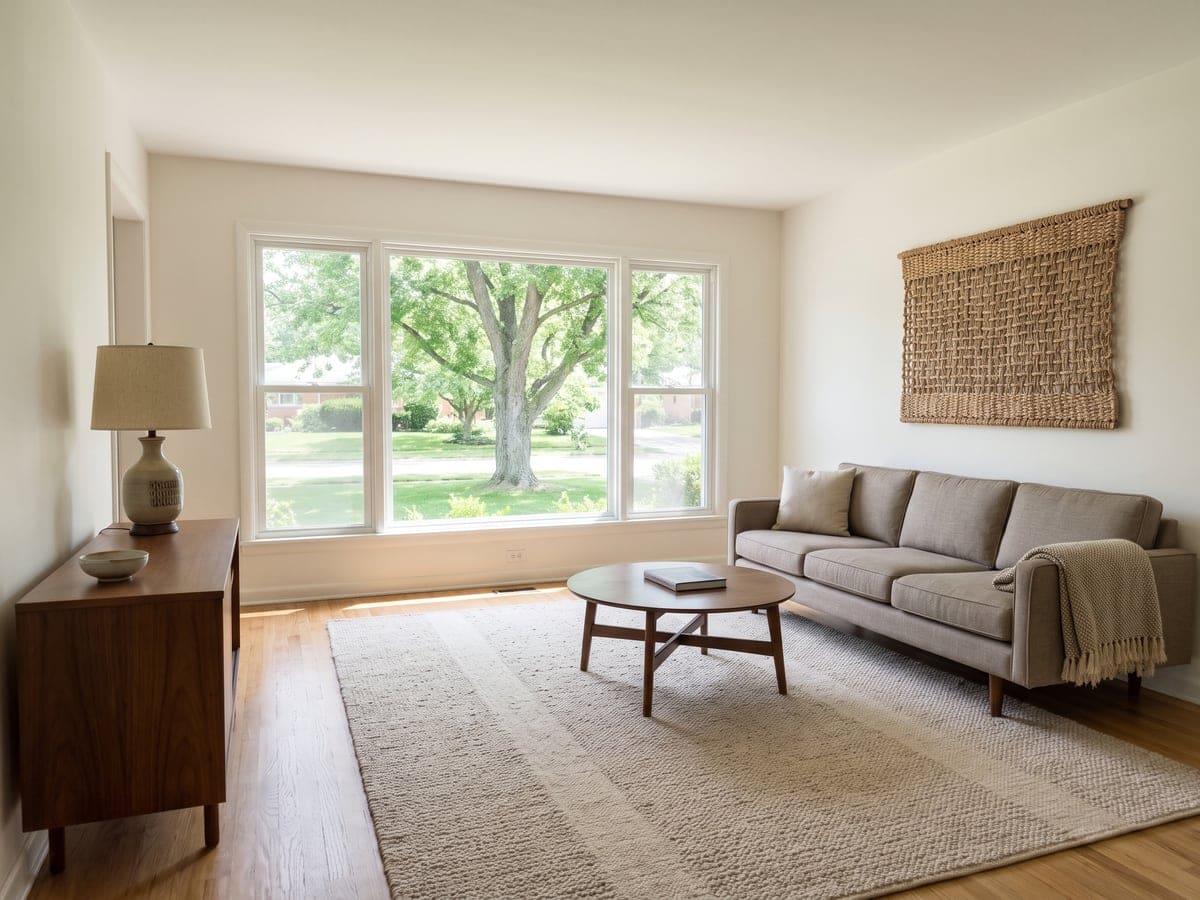
Skokie at a glance
| Figure | What it is |
|---|---|
| 25,159 | Housing units in Skokie (Census estimate) |
| 1959 | Median year built for the housing stock (Census estimate) |
| About 38.1 percent | Housing units built from 1950 to 1959 (Census estimate) |
| About 54.5 percent | Detached single family houses (Census estimate) |
| About 13.3 percent | Housing units in buildings of two to four units (Census estimate) |
| About 74.7 percent | Owner occupied share of occupied homes (Census estimate) |
| About 41.2 percent | Three-bedroom homes (Census estimate) |
| About 40.2 percent | Households that include someone 65 or older (Census estimate) |
About 54.5 percent of Skokie's 25,159 housing units are detached single family houses and about 13.3 percent are in buildings of two to four units; owners occupy about 74.7 percent of the 24,382 occupied homes (Census estimate).2
1950s houses and small apartment buildings
About 20.9 percent of Skokie's occupied homes have a householder who moved in during 2020 or later, including about 40.4 percent of renter households and about 14.3 percent of owner households (Census estimate).3 About 41.2 percent of the Village's homes have three bedrooms, and the median home has 5.6 rooms (Census estimate).4 About 40.2 percent of the 24,382 households include someone 65 or older, about 31.7 percent include someone under 18, with an average household size of 2.68 (Census estimate).5
For a reset before a schedule starts, a deep clean runs the home top to bottom. At the end of a lease, a move-out cleaning covers the empty rooms, from the inside of the cabinets, closets and appliances to the floors underneath.
The Village's words on cleaning products and trash
The Skokie Fire Department strongly warns against mixing household cleaners, saying mixing cleaning products can create poisonous fumes or harmful chemicals, with bleach and vinegar making chlorine gas, bleach and ammonia making chloramine gas, bleach and rubbing alcohol making chloroform, and hydrogen peroxide and vinegar making peracetic acid.6
Those products do not belong in the trash cart. The Village's once-weekly refuse collection, for single-family homes and housing with four or fewer units, does not allow household hazardous waste such as pesticides, cleaning products, antifreeze and used motor oil, or e-waste such as computers, monitors and televisions, or construction waste from contractors or large do-it-yourself projects.7 We never take away or dispose of a customer's cleaning products.
In Skokie, garbage and recycling are collected on the same day for houses and small apartment buildings of up to four units, with carts out by 7 a.m. on collection day; condos and other multi-family buildings of more than four units receive trash collection at a frequency that depends on the property; the Village keeps separate recycling guidelines for single family households up to four-unit buildings and for condominiums or apartments over four units.8
A household with more trash than its cart holds in a given week can place sealed trash bags on top of the cart on collection day, not before, and not on the ground.7
Large clean-outs and move-outs in Skokie
Large collections of refuse or bulk items require a dumpster and are the resident's responsibility; small move-outs of a few bulk items must be scheduled with Public Works before the items are set out; residents may also take construction debris and other landfill waste to the SWANCC transfer station.9
The once-weekly program covers single-family homes and buildings of up to four units. About 28.5 percent of Skokie's housing units have two bedrooms and about 18.4 percent have four or more bedrooms (Census estimate).4
Electronics and textiles in Skokie
Skokie's refuse FAQ says it is against the law to put electronics such as televisions, computers and printers in the landfill; Skokie residents can drop off electronics at the SWANCC Glenview Transfer Station, and the Park District, Village and community partners host an annual electronics recycling event called Spring Greening.9 We never collect or dispose of a customer's electronics.
The Village points residents to scheduling a textile pickup with its textile recycling partner; textiles must be clean, though holes, frays and missing socks are all acceptable.9 Scheduling that pickup is the household's step, separate from a cleaning visit.
Questions about cleaning a Skokie home
How does the visit work for a 1950s Skokie house?
The visit covers the floor plan as it is set out. On a house that has not had a full clean in a while, a deep clean runs the home top to bottom before any schedule starts.
Will you take away old cleaning products?
No. Skokie's once-weekly refuse collection does not allow household hazardous waste, which the Village lists as including cleaning products.7
What does Skokie say about extra trash during a move?
A household with more trash than its cart holds can place sealed bags on top of the cart on collection day, not before, and not on the ground.7 For a small move-out of a few bulk items, the Village says to schedule with Public Works before setting items out; large collections need a dumpster and are the resident's responsibility.
Can Skokie residents drop off electronics for recycling?
Skokie's refuse FAQ says it is against the law to put electronics in the landfill; Skokie residents can drop electronics off at the SWANCC Glenview Transfer Station, and an annual Spring Greening event hosted by the Park District, Village and community partners accepts electronics for recycling.9 We never take away or dispose of a customer's electronics.
Can old clothing be recycled in Skokie?
The Village points residents to scheduling a pickup with its textile recycling partner; textiles must be clean, though holes, frays and missing socks are all acceptable.9 That pickup is a household step, arranged separately from any cleaning visit.
What is Skokie's rule on large clean-outs?
For a large collection, a dumpster is the household's responsibility. For a small move-out of a few bulk items, the Village says to schedule with Public Works before setting items out; construction debris and other landfill waste may be taken to the SWANCC transfer station.9 Neither step is part of a cleaning visit.
What drives the price?
The size of the home, the rooms covered, the time since the last cleaning, and the scope of the visit (a regular pass, a deeper reset or an empty-rooms move clean). What goes into the price of a house cleaning sets out each driver at length.
Related pages
Call (312) 436-0710 with the age and layout of the home, or leave your number below.