The figures that frame the work
The City's neighborhood boundary file pairs Wicker Park with the West Town community area, so community area figures below are for all of West Town rather than Wicker Park on its own.
| Figure | What it is |
|---|---|
| April 12, 1991 | City Council designation of a Wicker Park landmark district |
| About 86,453 residents | West Town community area, City estimate |
| About 39 percent | Residents aged 25 to 34, West Town community area |
| About 58 percent | Renter-occupied homes, West Town community area, CMAP estimate |
| About 43 percent | Units in two-, three- and four-unit buildings, West Town community area, CMAP estimate |
| About 40 percent | Units built before 1940, West Town community area, CMAP estimate |
| About 45 percent | Two-bedroom units, West Town community area, CMAP estimate |
A Wicker Park landmark district was designated by City Council on April 12, 1991, with no map or street list attached. Which addresses sit inside the district is a question for the City's landmarks office. Across the surrounding West Town community area, there are about 86,453 residents, with about 39 percent aged 25 to 34. The same community area reports about 58 percent of homes renter-occupied, about 43 percent of housing units in two-, three- and four-unit buildings, including 32 percent in three- and four-unit buildings alone, about 40 percent of units built before 1940 and about 13 percent built in 2010 or later, and about 45 percent of units with two bedrooms, the most common size.
Older buildings and newer construction, in the same neighborhood
Older stock is still the main story in West Town: about 40 percent of units predate 1940. Newer construction has also arrived in real numbers, with about 13 percent of units built since 2010. The two sides change the work. Older buildings bring plaster, old tile, original trim and the kind of wood floors that want a well-wrung mop; newer construction brings a cleaner structural frame but often arrives on the back of a rehab, with fine dust that keeps settling after the trades leave.
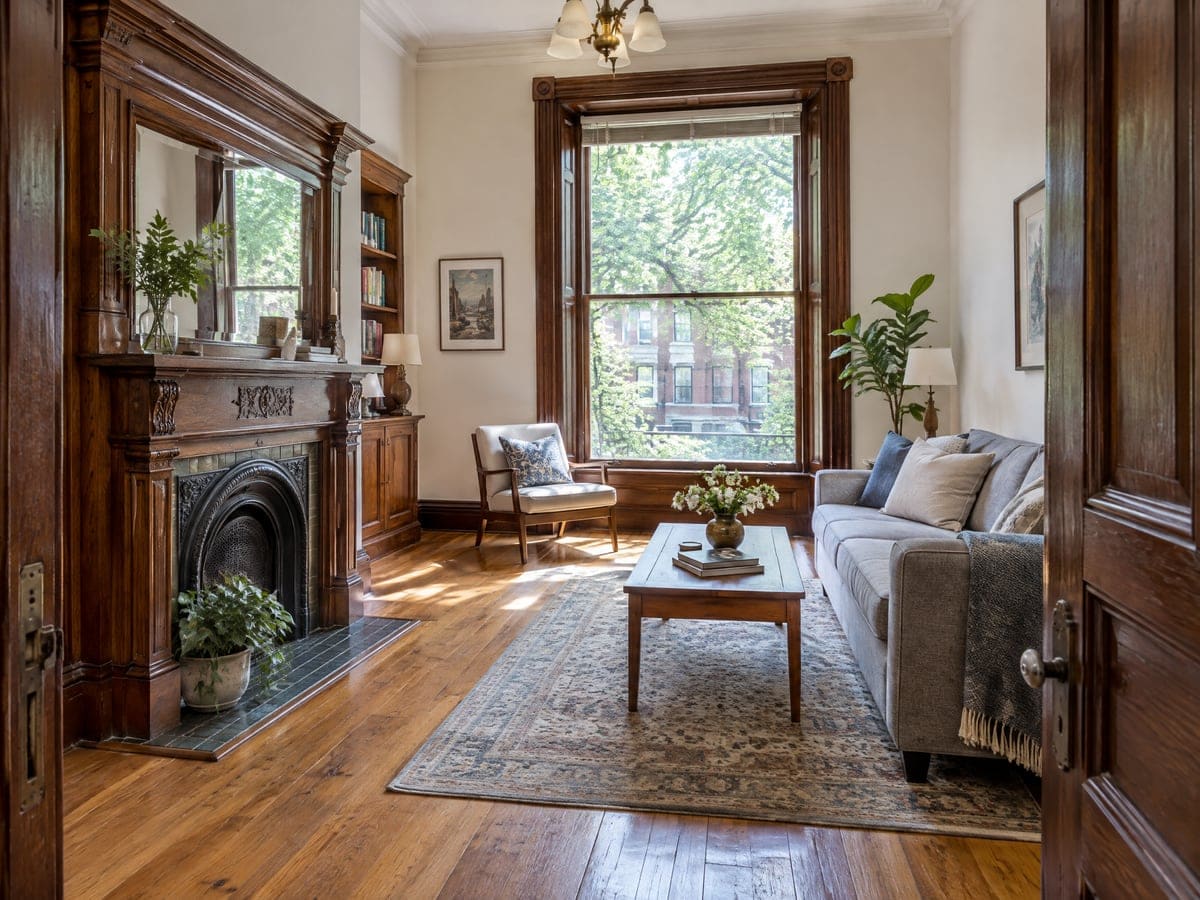
An original-woodwork apartment and a gut-rehab new interior can sit on the same block here.
Inside an older apartment the work runs top-down from the floor, with an extendable duster for the ceiling, the trim and the tops of cabinets. The reach stops at what a long handle covers; no chair, counter, step stool or tub edge gets stood on. Peeling paint, loose plaster, cracked grout and dripping fixtures are repair items that go to whoever maintains the home. Testing or treatment of the materials behind old paint or old plaster is a specialist's job.
If your apartment is just coming out of a rehab, the fit is post-construction cleaning after a rehab. If the place is lived in and overdue for a reset, a deep clean handles the catch-up list, with a recurring visit keeping it in place afterward. For a two-bedroom in a converted or newer building with a shared entry, lofts and apartment buildings covers the entry logistics along with the apartment itself. For a longer read on the surfaces that make an older Wicker Park home its own place, older apartments and their woodwork walks through radiators, plaster and hex tile. Cleaning in the Gold Coast covers a different side of the city, where front desks and condo associations drive how a visit is set up.

Who handles what
Cleaning handles the surfaces, dust, grease, grime and soft furnishings. Repairs and anything requiring specialist testing are a different trade. If you are unsure which category a problem falls into, get in touch and we will say which trade is better suited.
Dust after a rehab, in a two- or three-flat
A gut rehab leaves behind the hardest kind of dust: a fine mix of drywall powder, sawdust and compound haze that gets into every edge of an apartment. The first pass pulls what has already settled on surfaces, floors and inside the vent covers. The second pass catches the layer that fell out of the air during and after the first pass. The visit touches tops of trim, the tops of door frames, inside the kick plates of cabinets, and the floors below the vents. The order of a rehab clean also pays attention to new cabinets: a fine wipe of each shelf and drawer removes the factory oil before anything goes in.