What the numbers say
| Figure | What it is |
|---|---|
| About 24,092 residents | City estimate for the community area |
| About 26 percent | Residents aged 18 to 24 |
| About 66 percent | Renter-occupied homes, CMAP community area estimate |
| About 51 percent | Housing units built before 1940, CMAP community area estimate |
| About 41 percent | Housing units with no bedroom or one, CMAP community area estimate |
| About 51 percent | One-person households, CMAP community area estimate |
Hyde Park has about 24,092 residents, with about 26 percent aged 18 to 24. Within the same community area, about 66 percent of homes are renter-occupied, about 51 percent of households are one person, about 41 percent of housing units have no bedroom or one, about 51 percent of units were built before 1940, and about 26 percent of units are in buildings of 5 to 19 units.
The typical visit here, described directly
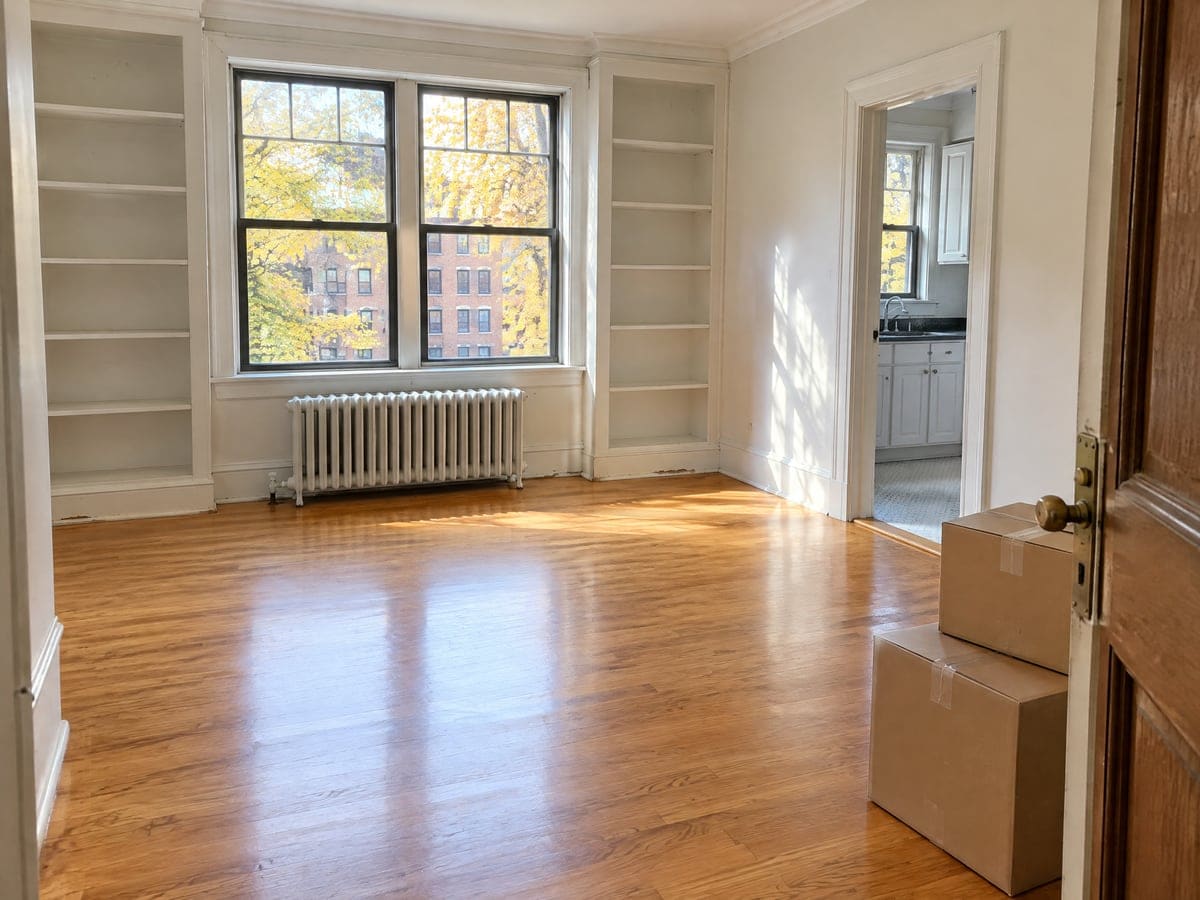
A typical Hyde Park visit is a single resident in a small, older apartment that holds hex-tile grout, painted trim, and a cast-iron tub or radiator. The visit works top-down from the floor with an extendable duster, finishes with the floors, and takes extra time in the bathroom because the grout and the trim ask for a soft brush and a damp cloth rather than a scouring pad. The kitchen is usually one wall long, which puts most of its wear on the cabinet fronts and the stovetop.
The two cleaning shapes a small older unit tends to need are a careful move-out cleaning before the keys go back when a lease ends, or a clean new apartment when a lease starts and the furniture is not yet in. The room-by-room sequence for the empty-apartment version is in a move-out checklist. Between those two, a single cleaning with no schedule works for anyone who wants a reset without a standing arrangement. For a unit shared by several tenants, cleaning in an apartment building covers the common areas while each private room follows its own tenant's wishes. The neighboring page on cleaning in Lincoln Park covers that part of the city.
Older Hyde Park buildings carry their own history on the City's list of individual Chicago Landmarks: Frederick C. Robie House on Woodlawn Avenue, built in 1909 and designated 1971; Keck-Gottschalk-Keck Apartments on University Avenue, built 1937 and designated 1994; Promontory Apartments on South Shore Drive, built 1946 to 1949 and designated 2019. The City's landmarks office is who to ask whether your own address shares that status.
The housing here sits mostly in multi-unit buildings, not in two-flats or houses.
What the RLTO does and does not do here
Chicago's Residential Landlord and Tenant Ordinance covers most Chicago rentals, with a short list of exclusions. One exclusion touches homes in and near Hyde Park: the ordinance does not cover dormitories and student housing run by or tied to a college. If that describes where you live, the housing agreement is what to read rather than the RLTO summary. For a renter covered by the ordinance, the summary is attached to each written lease and renewal, and that summary is where the covered deposit rules live. Deposit questions are between a renter and a landlord; a cleaning service cannot speak for either.
Lease timing, citywide
Across Chicago, about 42 percent of renter households (263,541 of 626,193) moved into their home in 2020 or later. The empty-apartment visit at the end of one lease and the beginning of the next is a familiar one on the city's leasing calendar, and small older apartments see plenty of both.
Services tied to small older units
Lease-end and lease-start work both take an empty apartment, which is what makes inside-every-cabinet and inside-every-closet work possible. Standing arrangements for a studio or one-bedroom tend to be shorter visits on a steady rhythm, with the kitchen and the bathroom carrying most of the time on the clock. Supplies, products and anything you want left alone get sorted up front. For a question about an unusual lease situation or an unusual layout, get in touch.
Courtyard buildings and the back stair
A fair number of apartments here sit in older courtyard buildings with a front stair for guests and a back stair that leads to the alley. The visit cleans the kitchen floor up to the back stair door and leaves the stair itself to the building. The front entry gets its own attention because that is where boots, grit and seasonal weather land.